
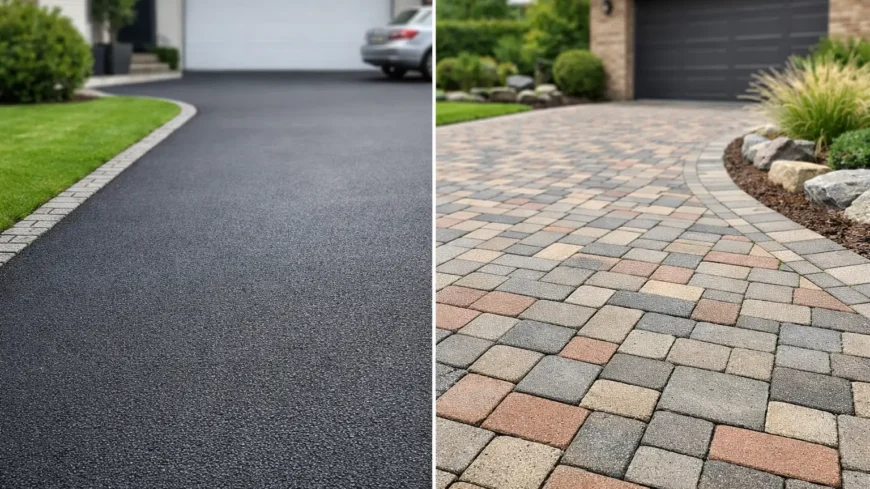
A driveway has to cope with more than parked cars. It deals with turning wheels, wet boots, bins, delivery vans, frost, rain and the daily use that soon exposes poor groundwork. When deciding between tarmac or block paving, the right answer depends less on fashion and more on how you use the space, what lies beneath it and how much maintenance you are prepared to take on.
For many homes and commercial properties across Scotland, tarmac is the practical choice for a hard-wearing, clean finish. Block paving can be an excellent option where appearance and design flexibility are priorities. Both can perform well for years, but only when the base, drainage and installation are handled properly.
Tarmac or block paving: the key differences
Tarmac creates a continuous, smooth surface. It is laid hot, compacted in layers and finished without the joints found in individual paving blocks. That makes it particularly suited to driveways with regular vehicle traffic, larger forecourts, access roads and car parks.
Block paving is made from individual concrete or clay blocks laid in a chosen pattern. It offers more colour, border and layout options, helping a driveway complement the style of the property. The joints between blocks are filled with kiln-dried sand, allowing a degree of movement while keeping the surface interlocked.
The visible finish is only part of the decision. A smart-looking driveway that sits on weak foundations will move, crack or sink regardless of the surface material. Proper excavation, a stable sub-base, correct edge restraints and planned water run-off are what give either option a long service life.
When tarmac is the better choice
Tarmac is often the strongest all-round option for clients who want a reliable, low-fuss driveway. Its dark, even finish suits modern and traditional properties, and it can cover wide areas without looking busy. For commercial sites, it also provides a clear, practical background for white lining, marked bays and pedestrian routes.
It is usually quicker to install than a comparable block-paved area, particularly on larger sites. Once the groundwork is complete, an experienced surfacing team can lay and compact the material efficiently, reducing disruption to homes, businesses and visitors. This matters when access needs to be restored promptly.
A continuous tarmac surface has no joints for weeds to establish in, and routine cleaning is straightforward. It is also forgiving under regular vehicle use when installed to the correct depth. Cars, vans and occasional service vehicles place concentrated loads on a driveway, especially when tyres turn while stationary. A well-built tarmac surface handles this far better than a thin or poorly supported finish.
Tarmac is not completely maintenance-free. Over time, oxidation can make it look lighter and small cracks may appear, particularly where water reaches the base or the ground moves. Cracks should be dealt with early, before water enters and creates a larger failure. Local repairs are often possible, though patching may remain visible on an older surface.
For properties with sloping access, tarmac can also be a sensible choice. The smooth finish makes it easier to manage surface water with falls, channels and gullies. However, it must never be laid simply to push water towards a garage, house wall or public pavement.
Where tarmac needs extra thought
Fresh tarmac needs time to cure and should not be treated roughly in its early days. Avoid sharp turns from heavy vehicles, motorcycle stands and parking in one spot for prolonged periods until the surface has hardened properly. In very hot weather, tarmac can soften slightly, although this is rarely a major concern in Scotland when the driveway has been correctly specified.
Its appearance is more limited than block paving. Borders, contrasting kerbs and edging can add character, but if a decorative pattern is the main aim, blocks offer more choice.
When block paving is worth the investment
Block paving is chosen primarily for appearance. It can create a formal entrance, define parking areas or bring colour and texture to the front of a property. With a suitable block type, laying pattern and edge detail, it can look highly finished without sacrificing strength.
It is particularly useful on driveways where the shape is irregular or where the design includes paths, steps, planting beds and different levels. Individual blocks can be cut around drainage covers, curves and features more neatly than a large expanse of tarmac.
Repair is another advantage. If a section is disturbed for utility work, or a local area settles, the affected blocks can be lifted, the base corrected and the paving re-laid. The result can be less obvious than a tarmac patch, provided replacement blocks match the originals and the work is carried out carefully.
Permeable block paving can help manage rainwater by allowing water to pass through the joints into a specially designed sub-base below. This can be useful where conventional drainage is difficult, but it is not simply a matter of using porous-looking blocks. The entire construction needs to be designed for permeability, including the bedding, jointing and stone layers.
The maintenance commitment with blocks
Block paving needs more regular attention than tarmac. Leaves, soil and moisture can encourage moss or weeds in the joints, especially in shaded areas. Regular sweeping, occasional cleaning and topping up jointing sand help keep the surface stable and tidy.
Poor installation is especially obvious with blocks. Without strong edge restraints, the paving can spread at the sides. If the sub-base is inadequate, wheel tracks, low spots and rocking blocks can follow. A cheap quote that skips excavation depth or uses insufficient aggregate may look attractive at first, but it can lead to costly remedial work.
Colour can also vary between batches and fade gradually with weather exposure. This is normal, but it is worth viewing real samples before committing to a large area. Lighter blocks may show tyre marks and algae more readily, while heavily textured blocks can take longer to clean.
Cost, lifespan and value
There is no honest fixed answer on price without seeing the site. Excavation depth, existing ground conditions, access for plant and materials, drainage work, edging, total area and intended traffic all affect the final cost. A driveway that looks straightforward can require substantial preparation if the existing surface is unstable or water is sitting below it.
In general, tarmac is commonly the more cost-effective option per square metre, particularly for larger driveways and commercial spaces. Block paving normally costs more because of the materials and the labour involved in laying, cutting and finishing individual units. That does not automatically make tarmac better value. For a smaller front driveway where kerb appeal is central to the project, block paving may justify the additional spend.
Both surfaces can last for many years when built properly and maintained sensibly. The condition of the foundation matters more than claims of a particular lifespan. Water is the main enemy of surfacing. If it is allowed to sit on the finish or penetrate the layers beneath, frost and vehicle loading can quickly turn a minor issue into cracking, settlement or potholes.
Drainage is not an optional extra
Driveway drainage should be considered before choosing the finish. Surface water needs a safe place to go, whether that is a correctly designed channel drain, a soakaway, permeable construction or another suitable drainage arrangement. The solution must suit the site, ground conditions and local requirements.
This is particularly relevant when replacing a front driveway. Water must not be directed onto the road or neighbouring land. A professional survey should identify existing falls, nearby thresholds, downpipes and drainage connections before work begins. It is far easier to build drainage into the project than to correct standing water after the surface has been laid.
Choosing the right surface for your property
Choose tarmac if you want a clean, dependable surface that handles regular traffic, suits a larger area and keeps maintenance straightforward. It is a strong choice for family driveways, shared access routes, forecourts and commercial parking areas where durability and minimal disruption matter most.
Choose block paving if visual detail, colour choice and a more tailored layout are worth the extra initial cost and upkeep. It can be ideal for a prominent entrance or a driveway designed to sit alongside paths, borders and landscaping.
For either option, ask what depth will be excavated, how the sub-base will be compacted, where water will drain and what edge restraints or kerbs are included. These are practical questions, not small print. They show whether a contractor is pricing for a surface that will last rather than a finish that only looks good on day one.
Roadsafe Surfacing Ltd assesses each site on its own ground conditions, traffic needs and drainage requirements before recommending a solution. The best driveway is not the one with the most fashionable finish. It is the one built to stay safe, level and serviceable through years of Scottish weather.