
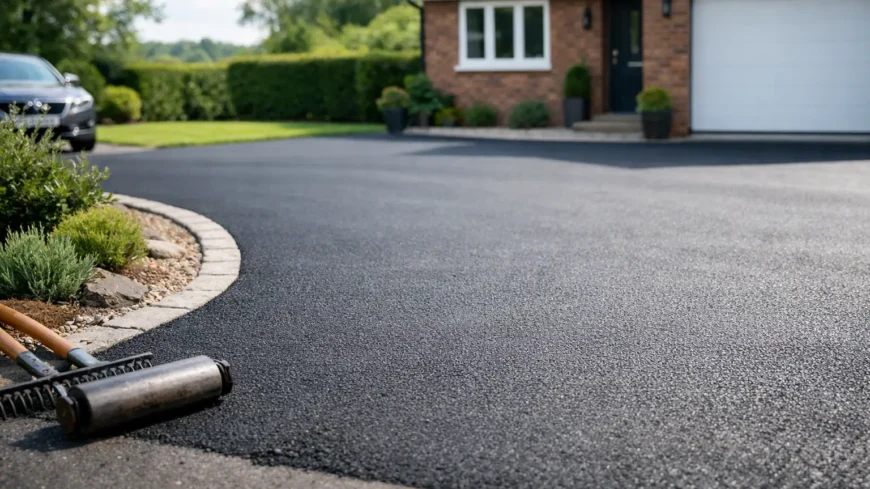
If you are weighing up a new driveway, you are probably asking a very practical question: are tarmac driveways any good? The short answer is yes – for many homes and commercial properties, tarmac is one of the most reliable, cost-effective and hard-wearing surfaces available. But like any surface, it suits some jobs better than others, and the right result depends just as much on installation quality as the material itself.
A driveway has to do more than look tidy on day one. It needs to cope with daily traffic, Scottish weather, standing water, turning tyres, oil drips and years of wear without becoming a maintenance headache. That is where tarmac tends to earn its reputation. It is widely used for roads, car parks and access routes for a reason – it is built for regular use and built to last when laid properly.
Are tarmac driveways any good for everyday use?
For everyday use, tarmac performs very well. It creates a smooth, solid surface that handles cars, vans and repeated foot traffic without much fuss. For households with more than one vehicle, or for properties where access matters, that reliability counts for a lot.
One of tarmac’s strongest points is its flexibility. Unlike more brittle surfaces, it can cope better with minor ground movement and changing temperatures. In places where frost, rain and damp conditions are part of normal life, that matters. A driveway surface that looks smart but starts cracking early is no bargain.
Tarmac also gives a clean and practical finish. It does not try too hard, but it looks professional and suits everything from traditional homes to newer developments. For commercial sites, it can make even more sense, because it offers a neat, functional surface without the higher cost of some decorative alternatives.
Why so many property owners choose tarmac
There is a reason tarmac remains a popular choice across the UK. It does the job well, and it usually does it at a sensible price point.
The first advantage is durability. A properly installed tarmac driveway can stand up to years of use with relatively little maintenance. It is especially well suited to properties where vehicles come and go regularly, because it is designed to handle weight and movement.
The second is speed of installation. Compared with some surface types, tarmac can often be laid and finished more quickly. That helps reduce disruption, which is important whether you are a homeowner trying to keep access open or a business that cannot afford a drawn-out job.
The third is value. Tarmac is often more affordable than block paving or resin-bound systems, particularly on larger areas. If your priority is a dependable, tidy and long-lasting surface rather than a heavily decorative one, it often gives a better return on investment.
There is also the maintenance factor. Tarmac is generally straightforward to look after. Sweeping, occasional cleaning and prompt repair of any damage usually go a long way. It does not demand constant attention to keep it serviceable.
The drawbacks of tarmac driveways
A good contractor should be honest about the trade-offs, because no surface is perfect.
The most obvious drawback is appearance. While tarmac looks neat and professional, it does not offer the same design flexibility as block paving, natural stone or resin. If your main goal is kerb appeal with decorative patterns, contrasting colours and a more bespoke finish, tarmac may feel a bit plain.
It can also soften slightly in very hot weather, especially if lower-grade materials or poor installation methods have been used. In Scotland that is usually less of a concern than in hotter climates, but heavy point loads, turning wheels and parked vehicles can still mark a weak surface.
Repairs, while usually straightforward, can sometimes remain visible. If a patch has been added after damage, you may notice a slight difference in texture or tone. That is not always a deal-breaker, but it matters if you want a perfectly uniform look.
Finally, drainage must be considered properly. Tarmac itself is not a magic fix for water issues. If the base preparation, falls and edge support are wrong, water can sit on the surface or find its way into weak spots. In most driveway failures, poor groundwork is the real problem rather than the tarmac itself.
How long does a tarmac driveway last?
A well-laid tarmac driveway can last 15 to 20 years, and often longer with proper maintenance and sensible use. Lifespan depends on several factors: the quality of the sub-base, drainage, thickness of the surfacing, traffic levels and whether the installation was done properly from the start.
This is where cutting corners becomes expensive. A cheap quote that skips excavation depth, base compaction or edging may save money upfront, but it usually shows up later as sinking, cracking or surface wear. A driveway is only as good as what sits beneath it.
For heavier-use sites, including forecourts, access roads or shared parking areas, specification matters even more. Domestic tarmac and commercial-grade surfacing are not always the same thing, and the right contractor should match the build to the traffic it will actually carry.
Are tarmac driveways good value for money?
In many cases, yes. Tarmac offers one of the best balances between cost, strength and long-term performance.
If you compare it with premium decorative surfaces, tarmac often comes in at a lower initial cost while still providing excellent service life. That makes it attractive for larger driveways, rural access routes and practical family homes where performance matters more than appearance alone.
It can also save money over time because it is relatively easy to maintain and repair. Minor issues can often be dealt with before they become major reconstruction jobs. That matters to homeowners, but it matters just as much to facilities managers and commercial property owners who need safe, presentable surfaces without constant spending.
That said, value should not be confused with the cheapest quote. Good tarmac work depends on sound preparation, suitable materials and proper finishing. If a price looks far below the rest, it is worth asking what has been left out.
Is tarmac the right choice for every driveway?
Not always. The honest answer is that it depends on what you need from the surface.
If you want a practical, durable and cost-effective driveway that can handle regular use, tarmac is often an excellent fit. It works particularly well for long driveways, sloped entrances, shared access areas and properties where ease of maintenance matters.
If your top priority is a high-end decorative finish, another surface may suit you better. Some homeowners prefer block paving or resin for visual impact, especially on smaller front drives where appearance is doing more of the work.
Ground conditions also matter. On some sites, drainage improvements, edging work or deeper excavation may be needed whatever surface you choose. The right decision comes from looking at the whole job, not just the top layer.
What makes a tarmac driveway good or bad?
The material matters, but workmanship matters more.
A good tarmac driveway starts with proper excavation and a stable sub-base. That foundation must be compacted correctly to support the expected traffic. Falls need to be planned so water drains away properly, and edges need to be secure so the surface holds its shape over time.
The finish itself should be even, well compacted and laid to the right thickness. Weak spots, rushed compaction or poor joints can shorten the life of the driveway dramatically. What looks acceptable on completion can fail early if the structure underneath is not right.
That is why experience counts. A contractor used to surfacing roads, car parks and heavy-use areas brings a level of practical knowledge that benefits domestic driveways too. Roadsafe Surfacing Ltd works on the principle that the job should be built for long-term performance, not just a quick handover.
Maintenance and aftercare
Tarmac is low maintenance, but not no maintenance. Keeping it in good condition is usually straightforward. Regular sweeping helps prevent debris build-up, and dealing with oil spills early is worthwhile. If small cracks or worn patches appear, repairing them promptly helps stop water getting in and causing bigger damage.
It is also sensible to avoid unnecessary stress in the early period after installation. Freshly laid tarmac needs time to settle and cure fully. A good contractor will tell you when it is ready for normal use and any precautions to take.
If the driveway is used properly and checked now and then, it should give years of dependable service without demanding much from you.
So, are tarmac driveways any good?
Yes – if you want a driveway that is durable, practical, cost-effective and proven in real-world conditions, tarmac is a strong choice. It may not be the most decorative option on the market, but it is one of the most dependable. For many property owners, that is exactly the point.
The real question is not just whether tarmac is good, but whether it is right for your property, your budget and the way the surface will be used. Get that part right, and a properly laid tarmac driveway can be one of the soundest investments you make outside your property.