
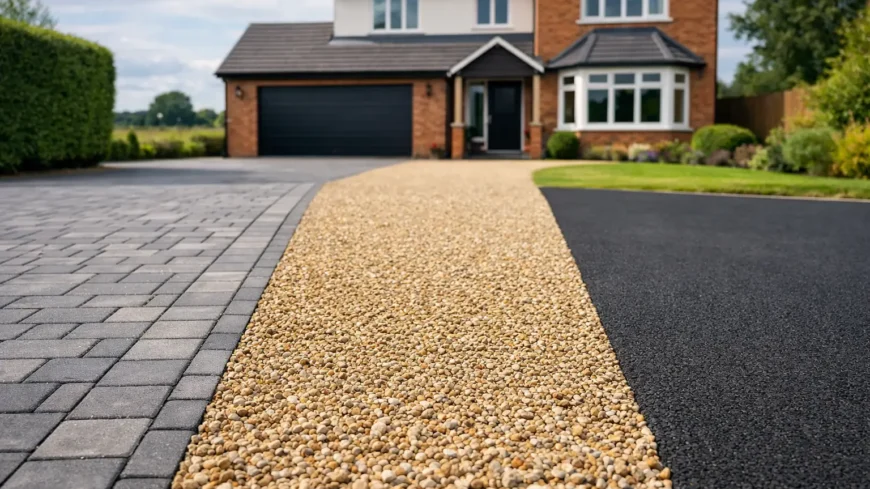
A driveway that looks smart on day one but cracks, dips or holds water after a hard winter is no bargain. When property owners ask about the best surface for driveways, the honest answer is that there is no single winner for every site. The right choice depends on traffic, drainage, budget, appearance and how much maintenance you are prepared to deal with over the years.
For homes, the priority is often kerb appeal and day-to-day practicality. For commercial sites, estates and shared access roads, durability, safety and minimal disruption usually matter more. In both cases, the surface needs to cope with British weather, regular vehicle loads and the condition of the ground beneath it. A good result starts with choosing the right material, but it lasts because the groundwork and installation have been done properly.
What is the best surface for driveways?
If you want the most balanced answer, tarmac is often the best all-round surface for driveways. It is cost-effective, durable, tidy in appearance and well suited to both domestic and commercial use. It also handles regular traffic well and can be laid efficiently, which helps keep disruption down.
That said, best all-round does not mean best for every job. A rural property may suit tar and chip better. A high-end frontage may lean towards block paving. A low-budget, low-traffic area may be fine with gravel. The best decision comes from matching the surface to the site rather than chasing whatever looks good in a brochure.
Tarmac driveways – why they suit so many properties
Tarmac remains one of the most popular choices for good reason. It gives a clean, professional finish and performs well under everyday use. For homeowners, it creates a neat entrance that is easy to maintain. For businesses and property managers, it offers a practical surface that stands up well to cars, vans and steady traffic.
Another advantage is speed. Tarmac can usually be installed faster than more decorative surfaces, which matters if access is limited or a site needs to stay operational. When laid on a properly prepared sub-base, it provides a strong, even finish with good longevity.
It is not completely maintenance-free. Like any surface, it can suffer if water is allowed to sit on it or if the base underneath has been poorly prepared. Edges also need to be properly restrained. But in terms of value, performance and appearance, tarmac is hard to beat.
Asphalt for heavier use and long-term performance
People often use tarmac and asphalt as if they mean exactly the same thing, and in everyday conversation that is common enough. In practice, asphalt surfacing can be a strong option where a tougher, more engineered finish is needed, particularly on larger driveways, access roads, car parks and commercial areas.
Asphalt is well suited to sites where load-bearing matters more, or where a surface needs to deal with frequent turning movements and heavier vehicles. It offers a durable, smooth finish and is a sensible choice when performance is the main concern.
For a standard domestic driveway, it may be more than you need. For shared drives, forecourts and busier access routes, it can be money well spent.
Block paving – attractive but higher maintenance
If appearance is the main priority, block paving is often high on the shortlist. It can look excellent, comes in different colours and patterns, and gives a more decorative finish than tarmac or asphalt. For period homes or properties where presentation matters, that can be a real selling point.
The trade-off is maintenance. Block paving is more vulnerable to weed growth between joints, movement over time and staining if not looked after properly. Individual blocks can be replaced, which is useful, but the surface may need more ongoing attention to keep it looking its best.
It is also usually more expensive than tarmac. That does not make it a bad choice. It simply means you should go into it knowing that the upfront cost and the long-term upkeep are both likely to be higher.
Gravel – lower cost, but not always lower hassle
Gravel is often chosen because it is affordable and quick to install. On larger rural drives, it can be an effective option and it suits certain property styles well. It also allows water to drain through more naturally than some solid surfaces.
The downside is that gravel moves. It spreads, develops ruts, can be kicked onto paths and roads, and often needs topping up or levelling. It is not ideal for every user either. Prams, wheelchairs, bicycles and even ordinary foot traffic can be awkward on loose stone.
For a long country driveway, gravel may still make sense. For a busy residential entrance or a commercial property where presentation and ease of use matter, it is often less practical than it first appears.
Concrete – strong, but less forgiving
Concrete has a reputation for strength, and that is fair. It can provide a hard-wearing surface and a clean appearance. However, it is not always the most forgiving option in the British climate. Cracking can become an issue, particularly if the base is not properly prepared or the ground moves over time.
Repairs can also be more obvious than with other materials. If a section fails, patching it neatly is not always straightforward. Concrete may suit some properties, but it is rarely the first recommendation where flexibility, appearance over time and ease of repair are all important.
Choosing the best surface for driveways on Scottish properties
In Scotland, weather is a bigger factor than many people expect. Frost, heavy rain and repeated freeze-thaw cycles all put pressure on driveway surfaces. That means the best surface for driveways is not just the one with the best finish on installation day. It is the one that continues to perform after months of wet weather and winter conditions.
Drainage matters just as much as the top layer. A surface that cannot shed water properly will deteriorate faster, no matter how good the material is. That is why proper excavation, sub-base preparation and edge support are essential. Cutting corners below the surface nearly always leads to problems above it.
For many properties in Edinburgh, East Lothian and across wider Scotland, tarmac or asphalt offers the right mix of durability and value. They cope well with the climate, suit a wide range of property types and can be installed with minimal disruption when handled by an experienced contractor.
Budget, lifespan and appearance – how to balance them
Most customers are weighing up three things at once: what it costs now, how long it will last and how it looks. The difficulty is that the cheapest option upfront is not always the cheapest over ten years, and the best-looking option is not always the easiest to live with.
If budget is the main concern, gravel may look attractive at first, but regular maintenance can add up. If appearance is everything, block paving may justify the extra cost, provided you accept the upkeep. If you want a dependable surface with strong long-term value, tarmac is often the sensible middle ground.
That is usually where experienced advice makes the difference. A good contractor will not push the same answer for every site. They will look at use, levels, drainage, access and expected traffic, then recommend the surface that fits the job properly.
Installation matters more than many people realise
Even the best material will fail if it is laid on poor foundations. Soft spots, thin sub-bases, rushed preparation and bad drainage are the main reasons driveways break down early. Surface choice matters, but workmanship matters just as much.
A properly installed driveway should feel solid underfoot and under tyre, drain correctly and have a finish that stays tidy at the edges. It should also be designed for how the space is actually used, whether that means occasional domestic parking or regular commercial traffic.
That is why many clients choose a contractor with wider surfacing experience, not just someone who lays driveways. A team that also handles roads, car parks, pothole repairs and hard-wearing public-access surfaces understands what it takes to build for longevity, not just appearance.
So which surface should you choose?
If you want a clear recommendation, tarmac is the best all-round choice for most driveways. It is durable, cost-effective, neat in appearance and practical for both residential and commercial use. Asphalt is a strong option where traffic is heavier or site demands are higher. Block paving works well where looks come first, while gravel and concrete suit more specific situations.
The right driveway should not just look good for a few months. It should stay safe, reliable and easy to live with for years. If you are weighing up options for your property, the smartest next step is to get advice based on the ground, the traffic and the finish you actually need, because the best surface is the one that keeps doing its job long after the installers have left.