
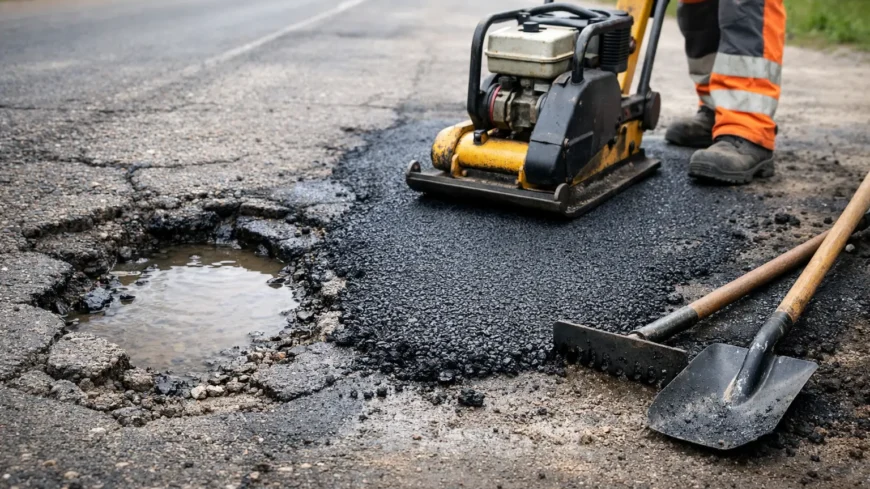
A pothole that reopens after one winter is not just frustrating. It can damage vehicles, create a trip hazard and make a driveway, car park or access road look neglected. So, can potholes be permanently repaired? The honest answer is yes, but only when the underlying cause is repaired as well as the visible hole. Simply filling broken tarmac is often a short-term patch, not a lasting solution.
For homeowners and site managers, the difference matters. A properly completed repair protects the surface around it, reduces future maintenance and helps keep people and vehicles safe. A rushed repair can leave you paying twice.
Can potholes be permanently repaired?
A permanent pothole repair is possible where the surrounding construction remains sound and water can be controlled. The damaged area must be cut back to solid material, cleaned out, rebuilt with suitable aggregate where required, and finished with hot asphalt or tarmac that is properly compacted and sealed into the existing surface.
The word “permanent” needs sensible interpretation. No surfacing material lasts forever. Roads, drives and car parks face rain, frost, vehicle weight, movement in the ground and daily wear. A quality repair should restore the strength of the surface and give many years of dependable service, rather than failing at the first spell of cold, wet weather.
If the base beneath the pothole has failed across a wider area, a single repair may not be the right answer. In that case, local reconstruction or resurfacing can offer far better value than repeatedly patching the same defects.
Why potholes come back
Most potholes begin with a small weakness. Water enters through cracks, joints or worn surface dressing and reaches the layers below. During freezing conditions, trapped water expands. As traffic passes over the weakened spot, the surface breaks away and the hole grows.
In Scotland, repeated wet weather and freeze-thaw cycles can be particularly hard on ageing tarmac. Standing water is another warning sign. It may point to poor falls, blocked drainage or a settled area beneath the surface. Repairing only the top layer without correcting water movement leaves the same problem in place.
Heavy traffic also changes what a repair needs. A domestic driveway used by cars has very different loading requirements from a delivery yard, farm access, forecourt or commercial car park used by vans, lorries and turning vehicles. The repair materials, depth and compaction must suit the use of the surface.
The common reasons quick patches fail
Cold-lay material has a role in emergency situations. It can make a dangerous hole safer quickly and keep an access route open until permanent works can be arranged. It is not, however, the strongest choice for every long-term repair, particularly where traffic is frequent or heavy.
Patches also fail when contractors apply new material onto loose, damp or crumbling edges. The new asphalt cannot bond properly to unstable material. Water then works into the joint, traffic breaks the edge again, and the pothole returns around the repair.
Insufficient compaction is equally damaging. Asphalt needs firm, even compaction to remove air voids and create a dense surface that resists water ingress. A repair that sits proud, dips below the existing level or has poorly sealed edges is more likely to deteriorate early.
What a lasting pothole repair involves
A professional repair begins with an assessment, not a bag of filler. The contractor should establish whether the defect is isolated, whether the base has softened, and whether drainage or surface cracking is contributing to the issue.
The damaged section is then marked out and cut into a neat square or rectangle. Straight, sound edges give the new material a secure boundary. Loose tarmac, weak aggregate and standing water are removed until stable material is reached.
Where the foundation has deteriorated, the excavation needs rebuilding. Suitable crushed stone is placed in layers and compacted to create a firm base. For deeper failures, this stage is what separates a repair that lasts from one that simply looks tidy for a few months.
A tack coat may be applied to improve the bond between existing material and the new asphalt. Hot asphalt is then laid to the appropriate depth, compacted with the right equipment and finished level with the surrounding surface. Finally, the joints are sealed where needed to help stop water reaching the repair edge.
This process takes more care than a temporary fill, but it directly addresses the reasons potholes develop in the first place.
When resurfacing is better than repairing
There is a point where isolated pothole repairs stop being cost-effective. If a surface has widespread cracks, loose edges, rutting, drainage problems or several patches in a small area, it may be reaching the end of its useful life.
Resurfacing does not always mean excavating everything from scratch. If the base remains stable, the existing surface can sometimes be prepared and overlaid with new tarmac. This produces a cleaner finish, improves levels and gives the whole area a consistent wearing course. Where the base is poor, full reconstruction may be necessary, but it avoids laying a new surface over a continuing structural problem.
For commercial sites, planned resurfacing can also be easier to manage than recurring emergency repairs. Work can be phased around trading hours, deliveries and public access, with clear traffic management and white lining completed once the surface is ready. That reduces disruption and helps maintain a professional, safe site.
Signs you should not keep patching
A single, clean-edged pothole is often a good candidate for a permanent local repair. More extensive work deserves consideration when repairs are repeatedly failing, water pools in the same places, cracks spread across the surface, or vehicle wheel tracks have sunk into the tarmac.
Pay attention to the edges too. Breaking edges on a driveway or car park often show that the construction is not adequately supported, particularly where vehicles regularly turn or pass close to the verge. Adding a small patch may hide the issue temporarily, but it will not strengthen the wider area.
Choosing the right repair for your property
The best repair depends on the condition of the surface, the cause of failure and how it is used. A homeowner may need one damaged section cut out and relaid to protect a driveway. A facilities manager may need several defects repaired quickly, with a longer-term maintenance plan for a busy car park. A developer may need failed areas reconstructed to specification before handover.
It is worth asking a contractor what they have found beneath the surface and how they plan to prevent water from returning to the repair. A clear answer should cover excavation depth, base preparation, material choice, compaction and edge sealing. Price matters, but the lowest quote can become expensive if it only covers a superficial fill.
Roadsafe Surfacing Ltd approaches pothole work with this practical focus: make the area safe, investigate the cause and carry out repairs that suit the condition and use of the surface. For urgent hazards, fast attendance can prevent further damage while the right permanent solution is planned.
Preventing the next pothole
The most economical pothole repair is the one supported by regular surface maintenance. Small cracks should be sealed before water gets below the tarmac. Drainage channels and gullies should be kept clear, and early signs of settlement should be investigated before traffic turns them into a larger failure.
Avoid allowing heavy vehicles to repeatedly use edges not designed for their weight. On commercial sites, clear route planning and suitable loading areas can reduce stress on vulnerable sections. On domestic drives, prompt attention to cracks, standing water and loose areas usually costs far less than waiting for a hole to form.
A well-repaired pothole should blend into a surface that remains stable, dry and properly supported. If yours keeps returning, treat that as a signal to look below the surface rather than accepting another temporary patch.