
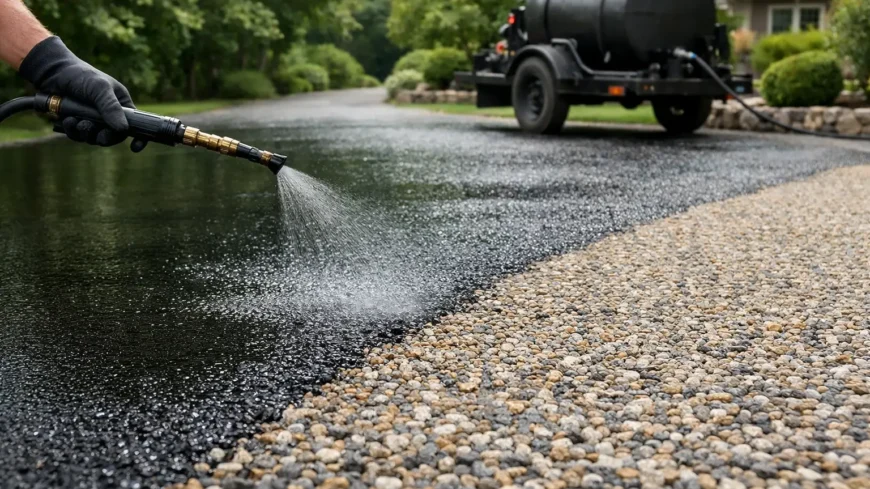
A tar and chip drive can look excellent when it is first laid – textured, tidy and far less formal than plain black tarmac. Then, after a few years of weather, traffic and loose stone, many property owners start asking the same question: can you seal a tar and chip driveway? The short answer is yes, in some cases, but not always in the way people expect, and not always with good results.
That matters because sealing the wrong surface, or sealing it at the wrong time, can do more harm than good. With tar and chip, the finish depends on the bond between the binder and the stone. If that balance is disturbed, you can end up with trapped moisture, loose aggregate, patchy colour or a surface that loses the very texture it was chosen for.
Can you seal a tar and chip driveway without causing problems?
You can seal a tar and chip driveway, but it depends on the age of the surface, its current condition and what you mean by “seal”. Some people mean a protective coating to reduce stone loss. Others mean a bitumen-based dressing to refresh the appearance. Others simply want to stop water getting in.
That is where confusion starts. Tar and chip is not the same as block paving, resin or standard asphalt. It is a layered surface made by applying a hot binder and covering it with stone chippings, which are then rolled into place. Because the top finish is aggregate rather than a smooth closed surface, many sealers made for other driveway types are not suitable.
A light surface treatment can sometimes extend the life of an older tar and chip drive. But a thick, glossy seal coat designed for asphalt or concrete can spoil the finish and create maintenance issues. In practical terms, sealing only makes sense when it supports the existing structure rather than trying to turn tar and chip into a different type of surface.
What sealing a tar and chip surface actually does
When done properly, a suitable seal treatment can help bind surface stones, reduce water penetration and slow down oxidation in the bituminous layer. It may also freshen up a drive that has gone dry and faded.
What it will not do is fix structural failure. If the driveway has soft spots, depressions, edge breakdown or widespread loss of stone because the original installation has failed, sealing is not a proper repair. It may hide the problem briefly, but traffic and weather will bring it back.
This is why a contractor-led assessment matters. A sound surface with light wear is very different from a drive that is breaking up at the edges or holding water after rain. One may benefit from treatment. The other may need patching, redressing or replacement in sections.
When sealing makes sense
The best candidates for sealing are older tar and chip driveways that are still fundamentally stable. If the base is solid, drainage is working and the stone loss is minor rather than severe, a suitable bituminous treatment may help preserve the surface.
This can be worthwhile on private drives, rural access roads and larger properties where tar and chip has been chosen for practicality and appearance. In parts of Scotland, where freeze-thaw conditions and persistent wet weather are hard on external surfaces, preventive maintenance often pays off when it is done early rather than left until the drive starts to fail.
Timing matters as well. A newly laid tar and chip drive should not be sealed straight away. It needs time to settle, bed in and shed any excess loose stone. Applying a coating too early can interfere with that process and lead to an uneven finish.
When sealing is the wrong approach
If the surface is shedding a lot of aggregate, sealing may simply lock in a poor finish. If there are potholes, wheel-rut depressions or widespread bald patches, the issue is beyond basic surface protection. The same applies if water sits on the driveway, because sealing over drainage problems tends to make them more obvious, not less.
There is also the question of traction. One reason many people choose tar and chip is the natural grip from the exposed stone. Some seal products reduce that texture. On sloping drives or areas used by vehicles in wet or icy conditions, that can be a real drawback.
Appearance is another trade-off. A sealed surface may darken and look more uniform, but it can also lose some of the character that makes tar and chip attractive in the first place. For homeowners who want a neat country-style finish rather than a smooth urban look, that change may not be welcome.
What products are used to seal tar and chip?
This is not a job for off-the-shelf driveway paint or general-purpose sealers. Tar and chip usually requires a compatible bitumen-based dressing or specialist rejuvenating treatment, applied at the correct rate for the condition of the surface.
Too little product will do very little. Too much can flood the stone, leave a sticky finish in warm weather and encourage tracking under tyres. That is why professional application matters. Surface preparation, weather conditions and coverage rates all affect the result.
A contractor may recommend a fog spray, surface dressing refresh, localised patching before treatment, or no sealing at all if the drive is already performing as it should. Good advice is not about selling an extra service. It is about protecting the surface in a way that makes financial sense.
Can you seal a tar and chip driveway yourself?
Technically, yes. In practice, it is risky.
The challenge is not just applying a coating. It is knowing whether the surface needs sealing, whether the chosen product is compatible, and whether the application rate is right for the texture and porosity of the driveway. Too many DIY attempts leave patchy dark areas, loose chippings stuck in the wrong places or a tacky finish that picks up dirt.
Tar and chip is also less forgiving than many people think. Because the top layer is textured and uneven by design, small mistakes show up quickly. Once a poor-quality product has been spread across the surface, putting it right can be more expensive than having the work assessed properly from the start.
For property owners managing commercial premises, shared access roads or customer parking areas, DIY treatment is even harder to justify. Surface safety, presentation and durability all matter, and disruption from a failed repair tends to cost more than planned maintenance.
Better ways to protect a tar and chip driveway
In many cases, the best “sealing” strategy is not a full seal at all. It is routine maintenance and timely repair.
Keeping the drive clear of debris helps surface water drain properly and reduces organic growth. Dealing with isolated weak spots early can stop edge breakdown from spreading. If stone loss becomes noticeable, a localised redressing treatment may be more effective than coating the whole area.
Heavy turning movements can also shorten the life of tar and chip, especially on tight domestic driveways. If larger vehicles regularly use the area, it may be worth reviewing whether the original surface type is still the right choice. Sometimes the right long-term answer is to upgrade high-stress sections to asphalt or another more stable finish while retaining tar and chip elsewhere.
How to know whether your driveway needs sealing or resurfacing
A simple rule helps here. If the driveway looks tired but remains firm, level and well-drained, maintenance treatment may be enough. If it is breaking up, moving under traffic or losing stones across large areas, resurfacing is usually the wiser investment.
A proper site inspection should look at the base condition, surface bond, drainage, gradient and traffic use. Residential drives with light daily use have different needs from farm lanes, car parks or commercial forecourts. There is no one-size-fits-all answer, which is why blanket advice online often misses the mark.
An experienced surfacing contractor should also be honest about the likely life left in the existing surface. There is no value in recommending a seal treatment if the driveway is close to the end of its serviceable life.
The practical answer for most property owners
So, can you seal a tar and chip driveway? Yes, but only when the surface is in the right condition and only with the right treatment. It is not a cure-all, and it is not always the best option.
If your driveway is stable and simply showing signs of age, sealing or surface rejuvenation may help you get more life from it. If it is structurally worn, patchy or poorly drained, repair or resurfacing will usually deliver a better result and better value.
That is the real point. A driveway should not just look better for a few months. It should stay safe, durable and worth the money you put into it. If you are unsure, get the surface assessed properly before any product goes down. A clear, honest recommendation at the start usually saves time, expense and disappointment later.
If your tar and chip drive is starting to show its age, treat that as the moment to act rather than wait for failure. The right maintenance at the right time is nearly always cheaper than putting off a problem that is only heading one way.