
If you are weighing up chip and tar vs asphalt, the right answer usually comes down to traffic, budget and the finish you want to live with for years. A farm lane, private driveway and busy commercial yard do not need the same surface, and choosing well at the start can save a great deal of repair work later.
Both options are proven surfacing methods. Both can deliver a solid, practical result when laid properly. The difference is in how they perform under pressure, how they look once finished, and what level of maintenance you should expect over time.
Chip and tar vs asphalt at a glance
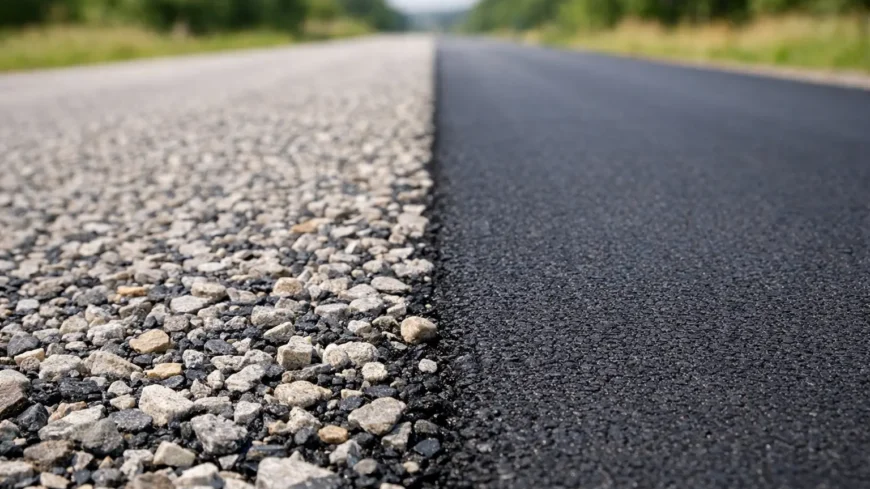
Chip and tar, often called tar and chip, is made by applying a hot bitumen binder and covering it with stone chippings that are then rolled into place. The result is a textured surface with a more traditional, rural appearance.
Asphalt is a smoother mixed material made from aggregates and bitumen, laid hot and compacted to create a dense, even finish. It is commonly used for roads, car parks, forecourts and domestic driveways because it gives a cleaner appearance and stands up well to regular traffic.
On paper, the choice can look simple. Chip and tar is often cheaper upfront, while asphalt usually offers a longer service life and a neater finish. In practice, the best option depends on where the surface is going, who is using it and how much wear it will take.
Cost matters, but so does the whole-life value
For many property owners, price is the first question. Chip and tar is usually the more budget-friendly option at the point of installation. It uses less processed material and can be a sensible choice where appearance is secondary and the area is large, such as long private roads, rural access routes and lower-traffic spaces.
Asphalt generally costs more to install, but that higher upfront spend often brings better long-term value. If you need a surface that copes with regular vehicle movements, turns, braking and day-to-day use without loosening stones or wearing unevenly, asphalt tends to justify its cost.
That is why cheapest and best value are not always the same thing. A lower initial quote can look attractive, but if the surface needs more patching, dressing or upkeep over the years, the savings can disappear quickly.
Appearance and kerb appeal
For homeowners, surface finish matters. For commercial sites, presentation matters too. A clean, even driveway or car park gives a better impression than a rougher finish that looks tired early.
Chip and tar has a more natural, textured look. It can suit country properties, farm tracks and settings where a softer, less formal appearance fits the surroundings. The stone finish can also help blend the surface into rural landscapes better than a smooth black finish.
Asphalt gives a more uniform and polished appearance. It looks smart on modern driveways, housing developments, retail forecourts and professional premises. If you want strong visual impact, clear edges and a surface that pairs well with kerbs, paving and line marking, asphalt is usually the stronger choice.
Grip and safety in daily use
Safety should never be treated as an afterthought. Surface grip affects vehicles, pedestrians and site liability.
Chip and tar naturally provides a textured finish, which can offer good skid resistance. That can be useful on slopes, longer drives and some rural roads. However, the loose stone element can create issues if the surface is not bedded in properly or if traffic movement is heavier than expected.
Asphalt can also provide excellent grip when specified and laid correctly. It has the advantage of being smoother and more predictable underfoot and under tyre, which makes it especially useful for car parks, access roads, paths and commercial premises. For sites that need white lining, marked bays or consistent pedestrian routes, asphalt is usually easier to work with and maintain safely.
Which surface lasts longer?
This is where usage really matters. Under light to moderate traffic, chip and tar can perform well and provide a dependable surface for many years. It is often perfectly suitable for private roads, estates and some domestic applications.
But where traffic is heavier, more frequent or includes turning vehicles, asphalt usually lasts better. It is more resistant to scuffing and movement, and it handles repeated use more effectively. Areas where vehicles brake, reverse or stand for long periods tend to expose the limits of chip and tar more quickly.
For commercial yards, busy driveways, car parks and shared access routes, asphalt often delivers the more durable result. If the base beneath the surface is prepared properly, it can provide a hard-wearing finish that holds up well over time.
Maintenance and repairs
No surface is completely maintenance-free. Weather, drainage, load and usage all affect lifespan.
Chip and tar may need periodic top dressing or localised attention as the surface ages. Some stone loss is normal, especially early on. Edges can also become vulnerable if they are not properly supported. That does not make it a poor option, but it does mean expectations need to be realistic.
Asphalt is generally easier to maintain in a clean, controlled way. Small defects can often be repaired before they spread, and the finished result is usually tidier. It is also simpler to keep clear of debris, which is one reason it is popular for commercial sites and residential driveways alike.
Drainage plays a major role with both surfaces. If water is left sitting, it will shorten the life of any paved area. A good contractor will always look beyond the top layer and assess the condition of the sub-base, falls and water run-off before recommending a solution.
Chip and tar vs asphalt for different properties
For a domestic driveway, asphalt is often the safer all-round investment. It looks smart, handles regular family traffic well and creates a cleaner finish outside the property. If appearance, resale value and ease of use matter, it has a clear advantage.
For a long rural drive or private estate road, chip and tar can make strong financial sense. It covers larger areas more affordably and can suit the setting visually. If traffic is lighter and expectations are practical rather than high-end, it can be a very good fit.
For commercial premises, asphalt is usually the preferred option. Businesses need durability, tidy presentation and minimal disruption from future repairs. The same applies to schools, public access areas and sites where safety markings or a professional finish are important.
For agricultural and lower-speed access routes, chip and tar may still be worth considering. The right answer depends on the load, turning movements and how the route is used through the year.
Weather and local conditions in Scotland
In Scotland, surface choice needs to account for wet weather, temperature changes and ongoing wear from grit, traffic and surface water. Freeze-thaw conditions can expose weak spots quickly if the groundwork is poor.
That is why the material alone should never be the only focus. Proper excavation, a sound sub-base and correct installation matter just as much as whether you choose chip and tar or asphalt. A well-built surface will outperform a cheaper job done badly every time.
For exposed sites, sloping access roads or high-use entrances, it is worth getting advice based on the actual conditions rather than choosing purely on price. What works on one property may be the wrong choice a few miles away.
How to decide without overpaying
The best starting point is to ask three practical questions. How much traffic will the surface take? How important is appearance? How long do you want the result to last before major work is needed?
If your priority is lower upfront cost for a larger, lower-traffic area, chip and tar can be the right call. If your priority is a longer-lasting, neater and more hard-wearing surface, asphalt is usually the better investment.
A dependable contractor should talk you through the trade-offs clearly, not push a one-size-fits-all answer. At Roadsafe Surfacing Ltd, that means looking at the site properly, understanding how the surface will be used, and recommending the option that gives you the strongest result for your budget.
The better choice is the one that suits the job
There is no point paying for a premium finish where a practical surface will do, and there is no value in cutting corners on an area that takes daily wear. Chip and tar and asphalt both have their place. The real difference comes from matching the material to the job, building it on the right foundation and making sure the work is carried out to a standard you can rely on for the long term.
If you are planning a new driveway, resurfacing a road or upgrading a car park, take the time to choose the surface that will still be doing its job properly years from now.