
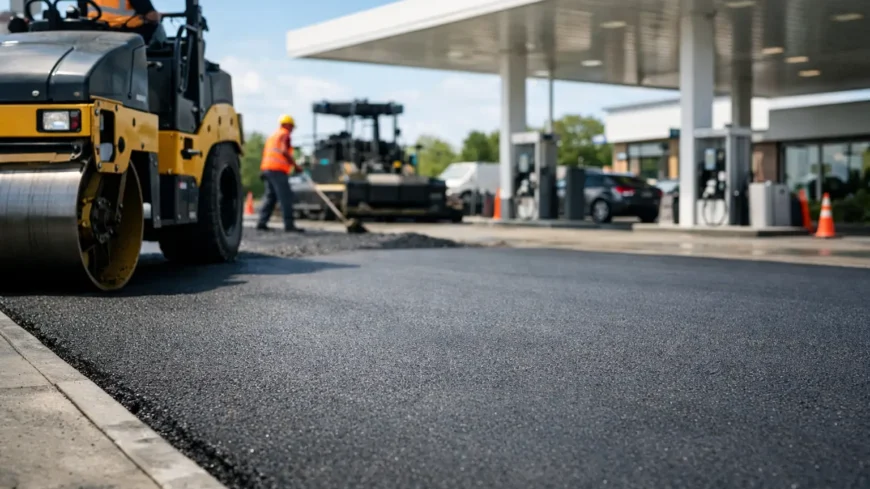
A worn forecourt tells people more about a site than most owners realise. Cracks, potholes, loose stone, pooling water and faded markings do not just look poor – they create safety risks, affect day-to-day operations and leave visitors with the impression that maintenance is being left too long. That is why forecourt resurfacing is not simply a cosmetic upgrade. It is a practical investment in safety, presentation and long-term value.
For commercial properties, petrol stations, retail units, industrial premises and public-facing sites, the forecourt takes constant punishment. Cars turn sharply, vans brake heavily, delivery vehicles sit under load, and foot traffic adds another layer of wear. In Scotland, weather does its share too. Freeze-thaw cycles, standing water and general surface ageing can quickly turn a tired forecourt into a liability.
Why forecourt resurfacing matters
A forecourt has to do several jobs at once. It needs to look professional, carry regular traffic, remain safe underfoot and withstand oil, fuel, water and general surface stress. When the surface starts to fail, the problems rarely stay cosmetic for long.
Small cracks let water in. Once water gets below the surface, it weakens the structure underneath. In colder conditions that water expands, breaks the surface further and accelerates deterioration. What begins as minor damage can become potholes, edge failure and uneven patches that affect vehicles and pedestrians alike.
There is also the issue of site image. For customer-facing premises, first impressions count. A clean, well-laid forecourt supports the standard of the business behind it. For landlords, developers and facilities managers, it shows the site is being maintained properly. For public sector buyers, it supports safer access and easier long-term upkeep.
When a forecourt needs resurfacing
Not every damaged forecourt needs full reconstruction, but there comes a point where patch repairs stop being cost-effective. If the same area is failing repeatedly, or if the surface has widespread cracking and deformation, resurfacing is often the more sensible route.
Common signs include potholes returning after previous repairs, standing water that does not drain away, ravelled or loose material on the surface, faded line markings, and a general uneven finish that affects traffic movement. Oil staining and surface breakdown around turning points or loading areas are also strong indicators that the top layer has reached the end of its working life.
For busy sites, timing matters. Leaving a forecourt too long can mean more than a rough appearance. It can lead to trip hazards, vehicle damage claims and disruption that becomes harder to manage once the structure underneath starts to fail.
What good forecourt resurfacing looks like
Good forecourt resurfacing starts well before the new surface goes down. The quality of the finished result depends on preparation, drainage, material choice and the standard of workmanship on site. A surface that looks tidy on day one but has been laid over poor foundations will not stay that way for long.
The first question is always the condition of the existing base. If the foundation remains sound, resurfacing can often be completed by preparing the area properly, correcting local defects and applying a new wearing course. If the base is failing, more extensive reconstruction may be needed. This is where experience matters. Over-specifying a job increases cost unnecessarily, but under-specifying it creates repeat problems.
Drainage is another major factor. A forecourt should shed water effectively and consistently. If water sits on the surface, it will shorten lifespan and increase the risk of deterioration. In many cases, the right falls and levels make as much difference as the surfacing material itself.
Then there is finish. A forecourt needs a durable, even, practical surface suited to the site use. On some sites, a straightforward bituminous finish is the right answer. On others, heavier traffic loads or tighter turning movements may call for a more hard-wearing specification. There is no one-size-fits-all option. It depends on traffic type, usage levels and the condition of the underlying structure.
Choosing the right material for the site
Tarmac and asphalt are often the preferred choices for forecourts because they offer a good balance of durability, value and speed of installation. They provide a neat finish, can cope well with regular vehicle use and are generally efficient to maintain over time.
That said, the right specification depends on the site. A forecourt serving light domestic traffic is very different from one used daily by vans, service vehicles or HGVs. Areas exposed to fuel drips, constant braking or repeated turning stress may need stronger design considerations. The cheapest option at the quotation stage is not always the most economical over the life of the surface.
This is where a proper site assessment pays off. A contractor should look at traffic loads, access requirements, drainage, existing defects and any operational constraints before recommending a surface. The aim is not to sell the most expensive job. It is to deliver a forecourt that performs properly and lasts.
Minimising disruption during forecourt resurfacing
For many businesses, downtime is the main concern. A forecourt that cannot be used affects customers, deliveries and site access. That is why planning matters just as much as laying the material.
On some projects, work can be phased to keep part of the site operational. On others, a short full closure is the quickest and least disruptive option. It depends on layout, access points and how the site is used. A dependable contractor will be upfront about what is realistic, what preparation is needed and how long each stage is likely to take.
Clear communication makes a big difference here. Site managers and property owners need to know when areas will be closed, when vehicles can return and whether line marking or final finishing will follow after the main surfacing work. A well-run job should feel organised, safe and controlled from start to finish.
Safety, liability and long-term value
A damaged forecourt is not just an inconvenience. It can become a liability issue. Uneven surfaces increase the risk of trips and slips. Potholes and failed edges can damage tyres and suspension. Poor drainage creates wet patches, surface weakening and hazards in colder weather.
Resurfacing addresses those issues at source. It gives the site a safer, more uniform surface and helps reduce the chances of ongoing reactive repairs. For businesses open to the public, that matters. For landlords and facilities teams, it helps protect the value and usability of the asset.
There is a cost to putting resurfacing off. Emergency patching, call-outs, complaints and repeated maintenance can soon add up. A properly resurfaced forecourt often proves better value than a cycle of short-term fixes, especially on sites with regular traffic and visible wear.
Forecourt resurfacing for Scottish conditions
In places such as Edinburgh and East Lothian, weather is a real part of the equation. Heavy rain, cold snaps and seasonal temperature changes all put pressure on external surfaces. Materials and installation standards need to reflect that reality.
That does not mean every forecourt needs the same heavy-duty build-up. It means the work should suit the conditions as well as the traffic. Proper compaction, sound edge detailing and good drainage are essential if the surface is going to hold up over time. Shortcuts in these areas usually show themselves quickly.
Roadsafe Surfacing Ltd works with both commercial and residential clients who need surfaces that are built for day-to-day use, not just visual impact. For forecourts, that means focusing on durability, safe access and a finish that continues to perform after the job is signed off.
What to expect from a reliable contractor
If you are planning forecourt resurfacing, the quotation should be clear about the scope of work, preparation involved and the finish being proposed. You should know whether the job includes repairs to failed areas, adjustments to levels, edging, drainage considerations and line marking if required.
You should also expect honest advice. Sometimes a forecourt needs full resurfacing. Sometimes localised repair work is enough for now. A reliable contractor will explain the difference and recommend the option that makes sense for the site, the budget and the expected lifespan.
Workmanship matters, but so does accountability. Guarantees, clear timescales and a willingness to deal with the practical realities of access and disruption all count. A forecourt is a working surface. The contractor should treat it that way from the outset.
If your forecourt is showing signs of wear, the best time to act is usually before damage spreads. A sound, well-finished surface protects users, supports the image of the property and saves more costly problems further down the line. The right job does not just make the site look better for a few weeks – it keeps it working properly for years.