
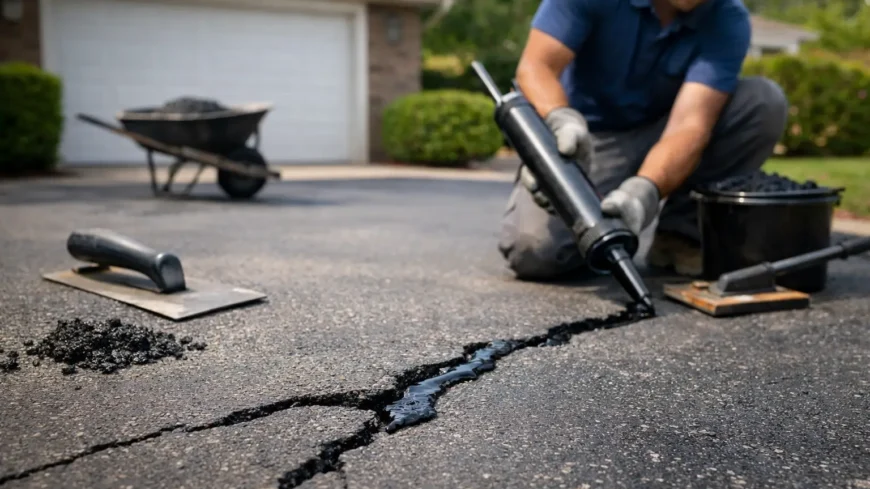
A few cracks in a tarmac driveway rarely stay as just a cosmetic issue for long. Once water gets in, traffic pressure and winter weather do the rest. If you need to repair cracked tarmac driveway surfaces properly, the real question is not just how to fill the damage, but whether the surface underneath is still sound enough to hold that repair.
For homeowners, that often means protecting the look and lifespan of the driveway before small faults become potholes. For commercial sites, it is more serious still. Cracks can create trip risks, let standing water form, and turn a manageable maintenance job into a larger resurfacing bill. The right fix depends on the type of crack, the age of the surface, drainage, and how heavily the area is used.
Why tarmac driveways crack in the first place
Tarmac is hard-wearing, but it is not indestructible. Most cracking starts because the surface is moving, ageing, or letting water work its way below the top layer. On domestic driveways, that may be down to weak foundations, repeated turning from heavier vehicles, or years of weathering. On commercial forecourts and access roads, higher traffic loads can speed the problem up.
Water is usually the biggest culprit. If water enters even a fine surface crack and then freezes, it expands and forces the crack wider. Over time, the edges start to break down. That is why minor cracking after a wet Scottish winter can suddenly look much worse by spring.
Age also matters. As tarmac gets older, it loses some of the oils that keep it flexible. The surface becomes more brittle and more likely to split under pressure. Add poor drainage or tree root movement, and the repair needed may go beyond a simple surface patch.
When to repair cracked tarmac driveway damage early
Early action is almost always cheaper than waiting. Hairline cracks may still be suitable for straightforward sealing if the base is stable and the surrounding tarmac is in good condition. Once the crack becomes wide, deep, or starts fretting at the edges, the repair becomes more involved.
There is also a safety issue to think about. A domestic driveway with visible cracking can still be usable, but if the surface is loose or uneven, it can catch footwear, bicycle tyres, bins, and pushchairs. On business premises, that kind of defect carries obvious risk for staff, visitors, and vehicles.
The practical rule is simple. If the crack is spreading, holding water, or breaking away at the edges, it needs attention. If several cracks are appearing across the area, it may point to failure beneath the surface rather than a one-off defect on top.
Different cracks need different repairs
Not every crack should be treated the same way. Fine surface cracks can often be cleaned out and sealed to stop water ingress. That can be effective where the tarmac is otherwise sound and the issue is caught early.
Wider cracks usually need more preparation. Loose material has to be removed, the area cleaned thoroughly, and the repair compound applied correctly so it bonds rather than just sitting in the gap. If the crack has formed because the base has dipped or broken up, simply filling the top is unlikely to last.
Then there are alligator cracks – the interconnected pattern that looks like reptile skin. That type of damage nearly always points to structural weakness below the surface. In those cases, patching individual lines is a short-term fix at best. Cutting out the failed section and rebuilding it properly is often the better investment.
Can you do it yourself?
For very minor cracking on a lightly used driveway, a DIY repair may help slow further deterioration. Cleaning the area properly, allowing it to dry, and using a suitable crack filler can improve appearance and reduce water penetration for a time.
That said, DIY products have limits. They do not correct poor sub-base support, drainage faults, or movement in the surface. They also tend to perform less reliably where cracks are wider, repeated, or exposed to regular vehicle turning. A neat-looking repair is not always a durable one.
This is where experience matters. A professional contractor will look beyond the visible crack and assess the reason it opened up in the first place. That can mean the difference between a repair that lasts through the next winter and one that fails within months.
How professionals repair cracked tarmac driveway surfaces
A proper repair starts with assessment, not filler. The first step is to check whether the damage is isolated or part of a wider failure. Contractors will look at the surface condition, edge stability, drainage, and signs of weakness underneath.
If the crack is suitable for localised repair, the damaged section is cleaned and prepared so the new material can bond correctly. In some cases, routing or cutting back the crack is necessary to create a sound edge. For more severe damage, the failed area may be cut out altogether and replaced with fresh tarmac.
Compaction is a major part of the job. Without it, patched material may sit proud, sink, or loosen too quickly under traffic. The repair also needs to tie into the surrounding surface so water does not immediately find its way back in.
For larger driveways, car parks, and forecourts, it is common to find that several repairs are needed in combination with surface dressing or resurfacing to restore a consistent finish. It depends on the age of the site and how widespread the damage is.
Repair or resurface?
This is often the key decision. If the cracking is limited to a few isolated areas and the rest of the driveway is in good condition, targeted repair is usually the sensible route. It controls cost, avoids unnecessary disruption, and extends the life of the existing surface.
If cracking is widespread, the driveway has multiple patches already, or the base is starting to fail, resurfacing may offer better value. Spending money on repeated small repairs can become false economy when the whole surface is nearing the end of its service life.
For property owners, the balance usually comes down to three things – the scale of the damage, the expected lifespan of the repair, and how important appearance is. On a front driveway, a tidy finish matters. On a commercial site, durability and safe access may come first. The best contractors will be honest about that instead of pushing the biggest job by default.
The role of weather and drainage
In Scotland especially, weather should never be treated as an afterthought. A repaired crack will only stay repaired if water is kept under control. Poor runoff, blocked channels, and standing water all shorten the life of tarmac.
That is why drainage checks are often part of good repair work. If water regularly sits on the driveway, the crack may simply reopen. Where the surface has sunk, the solution may need levelling work as well as patching.
Cold weather timing matters too. Some repairs are less effective in poor conditions, particularly if the surface is damp or temperatures are too low for the material to perform as it should. A contractor who knows local conditions will plan the work around that rather than rushing a patch that is set up to fail.
Choosing the right contractor
If you are arranging repairs, look for a contractor who handles both small domestic work and heavier-duty surfacing. That breadth of experience matters because a driveway used by family cars and delivery vans can still suffer from the same underlying issues seen on larger sites.
You want clear advice, a realistic quote, and a repair method that matches the condition of the surface. Guarantees, tidy workmanship, and a straightforward explanation of whether repair or resurfacing is more suitable all count for a lot. So does responsiveness. When cracks are already breaking down into potholes, delays only increase the cost.
Roadsafe Surfacing Ltd works with homeowners, businesses, and site managers across Scotland on repairs, resurfacing, pothole work, and wider surfacing projects, so the focus is always on practical long-term results rather than quick cosmetic fixes.
What happens if you leave it too long?
Small cracks become larger cracks. Larger cracks let in more water. Then the edges crumble, the base weakens, and potholes start to appear. That progression is common because surface defects tend to accelerate once the structure opens up.
There is also the cost of delay. A modest repair completed at the right time can prevent excavation, patch replacement, or full resurfacing later on. For commercial premises, leaving visible defects unresolved can also affect presentation, customer confidence, and site safety.
If your driveway or access area is starting to crack, the best time to act is before the damage spreads beyond the surface. A sound repair should do more than cover the problem – it should stop it getting worse and give you confidence in the ground you use every day.