
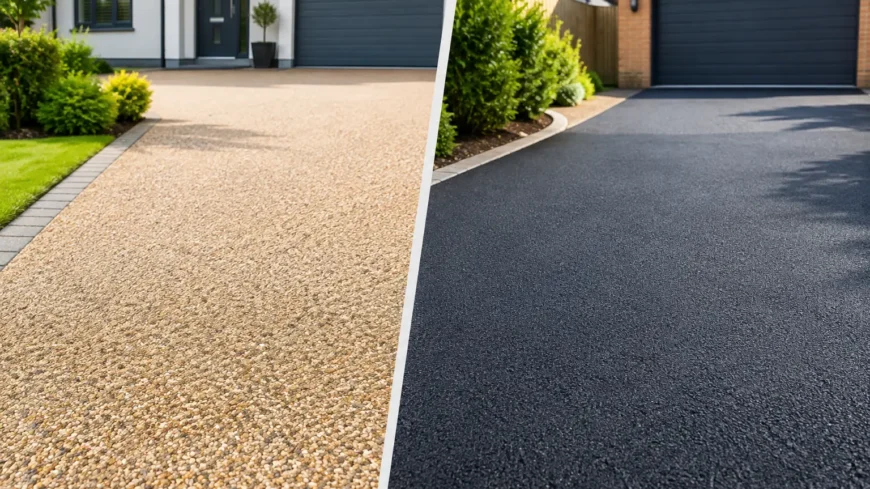
A driveway has to cope with far more than parked cars. In Scotland, it may face standing water, frost, tyre turns, delivery vehicles and daily foot traffic in the same week. When weighing up resin versus tarmac driveways, the right answer is not simply the surface that looks best on installation day. It is the one that suits the ground beneath it, how the area is used and the level of maintenance you are prepared to accept.
For many homeowners, tarmac remains the practical, hard-wearing choice. Resin can deliver a more decorative finish and, when correctly specified, help with drainage. Both can be excellent surfaces. The difference is in the detail of the installation and whether the material is right for your property.
Resin versus tarmac driveways: the key differences
Tarmac is a bituminous surface made from aggregate and binder, laid hot and compacted to form a smooth, durable finish. It is widely used on roads, car parks and forecourts because it is designed to take regular vehicle traffic. A domestic tarmac driveway uses the same proven surfacing principles, scaled and specified for the site.
Resin driveways usually refer to resin-bound aggregate. Natural stone is mixed with clear resin and trowelled onto a prepared base, leaving small gaps between the stones. This creates a textured, decorative appearance available in a wide choice of aggregate colours. A properly installed resin-bound surface can be permeable, allowing water to pass through the surface and into a suitable porous base below.
The two materials therefore serve slightly different priorities. Tarmac is generally selected for strength, speed and value. Resin is often selected for appearance and, where the full construction is suitable, surface-water management.
It is also worth clearing up a common misunderstanding. Resin-bound and resin-bonded are not the same product. Resin-bound aggregate is mixed with resin before it is laid. Resin-bonded finishes have resin applied to a base with loose aggregate scattered over the top. The latter can shed stone over time and is not normally the same smooth, permeable driveway finish people expect when they ask for resin.
Appearance and kerb appeal
Resin offers more scope for a tailored look. Homeowners can choose warmer, lighter or darker aggregate blends to complement stonework, brickwork or landscaping. The finish can work particularly well around paths, steps and entrance areas where visual continuity matters.
Tarmac has a cleaner, more understated appearance. Fresh black tarmac gives a property an orderly, well-finished entrance without competing with the house or garden. It can also be edged with block paving, kerbs or stone to add definition and lift the overall appearance.
Neither option should be judged on colour alone. Light resin blends can show tyre marks, dirt and organic staining more readily than a dark tarmac surface. Tarmac gradually weathers from black to charcoal grey, which many people prefer, but it will not offer the same decorative range as aggregate resin.
Strength, traffic and everyday use
For driveways with frequent use, turning vehicles or heavier loads, tarmac has a strong track record. It is a flexible surface, meaning it can accommodate a degree of movement in the ground better than more rigid finishes. With the right foundations, edges and thickness, it is well suited to family driveways, shared access roads and commercial entrances.
Resin-bound surfacing is durable, but it is not a shortcut around poor ground preparation. It needs a sound, stable base and careful installation in suitable weather. Heavy point loads, repeated tight turning and unstable sub-bases can lead to cracking or damage. This does not rule resin out for driveways, but it does mean the construction needs to be assessed honestly before work starts.
The base is where long-term performance is won or lost. Covering failed concrete, broken tarmac or soft ground without dealing with the underlying issue can leave either surface vulnerable. A dependable contractor will inspect drainage, levels, existing materials and vehicle use before recommending a finish.
Drainage and Scottish weather
Standing water is not just inconvenient. It can contribute to surface deterioration, algae growth and winter ice. Any new driveway should be planned so water drains properly and does not create a problem for neighbouring land or the public road.
A resin-bound driveway can be permeable, but only if it is laid over a suitable permeable construction. If resin is installed on an impermeable base with no effective drainage route, water cannot simply disappear because the top layer is porous. This is one of the most important questions to ask when comparing quotations.
Tarmac is normally impermeable at the surface, so drainage is managed through falls, channels, gullies or other designed outlets. That is not a weakness when it is done correctly. In fact, a well-designed tarmac driveway can direct water reliably away from buildings and high-traffic areas.
For exposed sites across Edinburgh, East Lothian and wider Scotland, the best option depends on the slope, soil, existing drainage and amount of rainfall the site handles. Good drainage design matters more than broad claims that one material is always better in wet weather.
Cost: look beyond the first quote
Tarmac is often the more cost-effective option, particularly for larger driveways. It is efficient to lay, widely available and offers excellent value per square metre when a substantial area needs resurfacing. It is also a sensible choice where practical performance matters more than a decorative finish.
Resin-bound aggregate usually costs more because of the materials, preparation requirements and detailed hand-finishing involved. Small areas can be especially expensive on a per-square-metre basis. That additional spend may be worthwhile where appearance, permeability and a particular aggregate finish are priorities.
The cheapest quotation is rarely the best comparison. Check what is included in the price: excavation, disposal of spoil, sub-base depth, edging, drainage, surface thickness and reinstatement of surrounding areas. A low figure that omits essential groundwork can become costly later or leave you with a surface that fails before it should.
Maintenance and repairs
Tarmac needs relatively little day-to-day attention. Keep it clear of debris, deal with oil spills promptly and avoid repeatedly parking very heavy vehicles in the same place where possible. Over time, it may need local repairs or resurfacing, especially if water has reached the base or the edges have been allowed to break down.
Resin requires regular sweeping and occasional gentle cleaning to prevent moss, leaves and dirt from settling into the textured surface. Harsh chemicals, aggressive pressure washing and unsuitable cleaning methods can affect the finish. Pale aggregate may also need more attention to retain its original appearance.
Repairs are possible with both materials, although matching can be more noticeable with resin. Aggregate batches and weathering can create slight variations, while a tarmac repair generally blends in as the surface ages. If easy, practical future maintenance is high on your list, tarmac has the advantage.
When tarmac is the better choice
Choose tarmac when you want a tough, cost-conscious driveway that can handle regular traffic and changing weather with minimal fuss. It is particularly effective for larger areas, sloping sites, shared access routes and properties where vans, trailers or several cars use the surface. Add well-built edging and sensible drainage, and it provides a neat, dependable result for years.
When resin is worth considering
Resin is a strong option when the driveway is primarily domestic, the base can be constructed correctly and the finish is a major part of the brief. It suits homeowners who want a decorative aggregate look, a comfortable walking surface and the potential benefits of a permeable system. It is best treated as a carefully specified installation, not as a cosmetic layer applied over an unknown base.
Get the recommendation based on your site
A surface should be chosen after looking at the property, not from a photograph. At Roadsafe Surfacing Ltd, we assess how the driveway is used, what is beneath the existing surface and how water will be managed before recommending practical tarmac or resurfacing work.
If you are deciding between resin and tarmac, ask for a clear scope of works and a straightforward explanation of the groundwork. The best driveway is the one built properly for your property, your traffic and the weather it will face.