
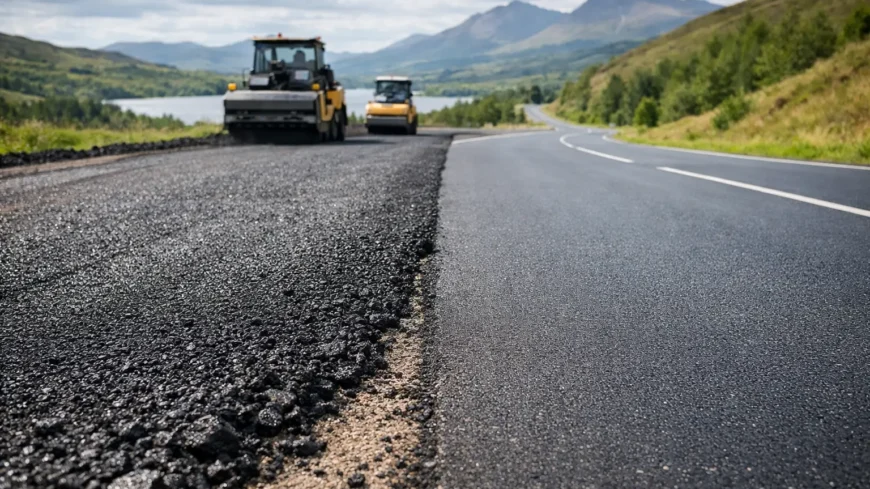
A Scottish road surface has to cope with far more than passing traffic. It must handle persistent rain, winter freeze-thaw cycles, grit, standing water, heavy delivery vehicles and regular temperature changes. That is why tarmac surfacing vs asphalt: which is best for Scottish roads? is not simply a question of appearance or initial price. The right answer depends on the site, the traffic it carries and how the surface will be maintained.
For most roads, car parks, access routes and driveways, both materials can deliver a safe, long-lasting finish when they are properly specified and laid on a sound foundation. The costly mistakes usually happen below the finished surface: poor drainage, inadequate excavation, weak edges or a base that is not designed for the load.
Tarmac surfacing vs asphalt for Scottish roads
In everyday conversation, tarmac and asphalt are often used to mean the same thing. In the surfacing trade, however, the terms can describe different materials and mixes.
Traditional tarmacadam combines stone aggregate with a tar-based binder. It was widely used on roads for generations and remains a familiar name for black surfacing. Modern asphalt generally uses bitumen as the binder, mixed with graded aggregate at controlled temperatures. It is the more common specification for current road, driveway and commercial surfacing work.
For a client, the practical issue is not the label alone. A contractor should explain the proposed mix, layer thickness, aggregate size, drainage arrangement and base construction. A well-designed asphalt surface will generally outperform a poorly installed ‘tarmac’ job, whatever it is called.
Why Scotland changes the choice
Scotland’s weather puts surfacing under pressure. Water is the main concern. Once it reaches cracks, joints or the sub-base, it can weaken the construction. When temperatures fall, trapped water expands as it freezes, widening defects and creating the conditions for potholes.
On exposed sites, particularly rural access roads, forecourts and higher-ground locations, repeated freezing and thawing can quickly expose weak workmanship. Coastal areas can also face salt exposure and wind-blown debris, while city sites in Edinburgh and elsewhere deal with constant turning movements, parked vehicles and utility traffic.
A suitable surface therefore needs more than a neat black finish. It needs positive falls to direct water away, properly formed channels or drainage where required, sealed joints, strong edging and a sub-base matched to the ground conditions. These details protect the investment far better than choosing the cheapest surface course.
Where asphalt has the advantage
Modern asphalt is usually the strongest all-round option for Scottish roads and high-use paved areas. It is available in different grades, allowing the surface to be tailored to cars, vans, HGVs, buses or plant vehicles. Dense asphalt mixes can provide a durable, relatively smooth finish for access roads, car parks and commercial yards.
It also offers consistency. Manufactured asphalt is produced to a controlled recipe, which helps a competent contractor achieve reliable compaction and performance. For public-facing areas, that matters. An even surface reduces trip risks, improves driving comfort and gives line markings a cleaner base.
Asphalt is particularly well suited to:
- estate roads and private access roads carrying regular traffic;
- car parks, retail forecourts and service yards;
- larger driveways where a tidy, durable finish is wanted;
- areas requiring white lining, bays, directional arrows or pedestrian markings; and
- repairs that need to tie into an existing asphalt surface.
There is a trade-off. Asphalt is only as good as the preparation beneath it. Laying a new surface over failed ground, waterlogged sub-base or broken edges may make the area look improved for a short time, but cracking and rutting will return. For commercial premises, that can mean disruption, further cost and avoidable safety concerns.
When tarmac surfacing is the right call
Tarmac remains a useful term for the type of hard-wearing, black surfacing many homeowners and businesses want. If a contractor proposes a tarmac-style solution, ask exactly what material will be installed and why it suits the site. The specification may be a modern bituminous macadam rather than traditional tar-based tarmac, and that is often appropriate.
For domestic driveways, paths and lower-traffic private access areas, a properly laid tarmacadam or asphalt macadam surface can be excellent value. It provides a smart, practical finish, can be installed efficiently and is straightforward to patch if local damage develops.
Traditional tar-bound materials can have specific uses, but they are less commonly selected for new mainstream surfacing projects than modern asphalt products. The handling, environmental requirements and availability of materials may all influence the decision. For most clients, performance and suitability should lead the conversation rather than attachment to a particular name.
Drainage is often the deciding factor
A road surface can be perfectly laid and still fail early if water has nowhere to go. This is especially relevant on driveways that fall towards a property, car parks with low spots and roads where existing gullies are blocked or insufficient.
Before work starts, the site should be assessed for levels and water flow. The finished surface may need falls towards drainage channels, gullies, soakaways or approved collection points. In some cases, permeable construction or alternative drainage measures may be needed to manage runoff properly.
Do not accept water pooling as normal after rain. Small puddles can indicate a local levelling issue; persistent standing water can undermine the surface and create an ice hazard in winter. Addressing drainage during installation is far less disruptive than digging up a new surface later.
Traffic loading matters more than many owners expect
A driveway used by two cars needs a different construction from a service yard receiving laden lorries. The surface may look similar on completion, but the depth and strength of the foundation should not be the same.
Lightly used residential areas may require a compacted sub-base and an appropriate wearing course. Commercial sites need greater consideration of axle loads, repeated turning, delivery schedules and areas where vehicles brake or queue. These high-stress points can require a heavier-duty asphalt specification or additional structural build-up.
Fuel areas, loading bays and tight turning circles deserve particular attention. Slow-moving heavy vehicles place more shear force on a surface than vehicles travelling steadily along a road. If this is overlooked, scuffing, depressions and cracking can appear well before the rest of the site shows wear.
Repairs, maintenance and whole-life cost
Neither material is maintenance-free, but prompt repairs make a major difference. Small cracks should be sealed before water enters the layers beneath. Local potholes should be cut back to sound material, rebuilt and compacted correctly rather than filled as a short-lived cosmetic fix.
Asphalt is generally straightforward to repair in sections, which makes it practical for busy sites where work must be phased to keep access open. A properly matched repair will restore strength and reduce the chance of water spreading under the surrounding surface.
Initial price matters, but whole-life value matters more. A low quote that omits excavation, proper base preparation, drainage or sufficient material depth is rarely a saving. A clear quotation should state what will be removed, how the ground will be prepared, the layers being installed and how waste materials will be handled.
Which surface should you choose?
For most Scottish roads, commercial yards, car parks and heavily used access routes, modern asphalt is usually the best choice because it can be specified for durability, traffic load and a clean finished appearance. For driveways and lighter-use areas, tarmac-style macadam surfacing remains a dependable, cost-effective option when installed to the right depth on a stable base.
The best decision is site-specific. Consider drainage, expected traffic, ground condition, access for machinery, required finish and future maintenance before committing. A family driveway in East Lothian should not be priced or built like a delivery yard, and a public-access car park should never be treated as a basic domestic paving job.
Roadsafe Surfacing Ltd assesses the full construction, not just the visible top layer, so clients can choose a surface that remains safe, tidy and serviceable through Scottish weather. A proper survey and a detailed quote give you a far better starting point than choosing between ‘tarmac’ and ‘asphalt’ on name alone.