
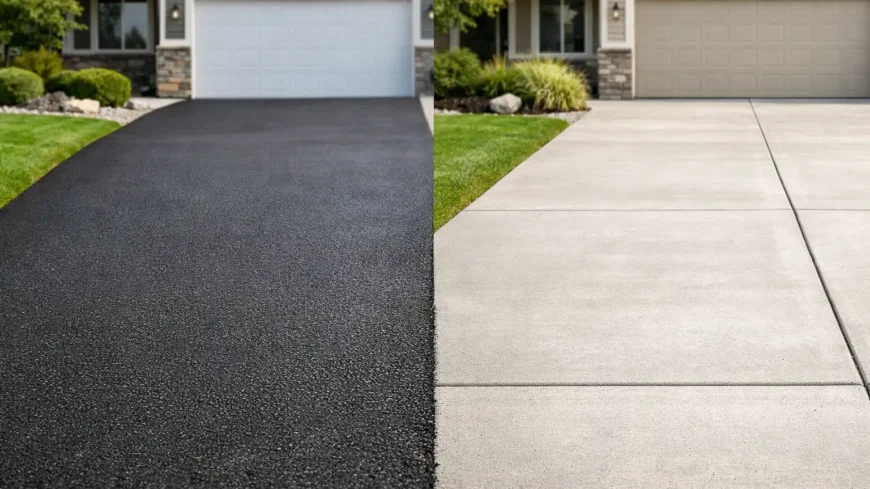
A driveway usually looks simple from the pavement. Then the quotes come in, the surface options start to blur together, and one question takes over – asphalt versus concrete driveway, which one actually makes more sense for your property?
The honest answer is that both can work well. The right choice depends on budget, appearance, traffic levels, ground conditions and how much maintenance you are prepared to deal with over time. For some properties, asphalt is the practical winner. For others, concrete earns its keep. What matters is choosing a surface that suits the job rather than picking the one that sounds best on paper.
Asphalt versus concrete driveway: what is the real difference?
Asphalt is a flexible bitumen-based surface often chosen for its clean finish, quicker installation and lower upfront cost. In the UK, many people also refer to similar domestic surfacing as tarmac, although the materials and mix designs can vary depending on the application. It gives a neat, dark finish and is widely used for driveways, roads, car parks and access routes because it stands up well to regular vehicle use.
Concrete is a rigid slab surface made from cement, aggregates and water. It can be plain, brushed, patterned or decorative, so it gives more design variation than asphalt. Once cured properly, it forms a hard-wearing driveway that can last for many years, but it behaves very differently under load and temperature changes.
That difference between flexibility and rigidity matters more than many buyers realise. A driveway is not just a top layer. It is part surface, part foundation, part drainage and part workmanship. If the base is poor, either material can fail early.
Cost matters, but so does value
If you are comparing initial installation prices, asphalt usually comes out cheaper than concrete. That lower entry cost is one of the main reasons homeowners and commercial clients often favour it, especially where the driveway area is larger or the surface needs to be laid quickly and efficiently.
Concrete tends to cost more at the start because of material costs, labour and curing time. Decorative finishes can push the price higher again. If appearance is a major priority and the budget allows for it, concrete may still be worth considering, but it is rarely the cheaper route.
That said, a lower quote does not always mean better value. If an asphalt driveway is laid too thin, installed on a weak sub-base or left with poor edging, savings at the start can disappear into repairs. The same goes for concrete that cracks because expansion joints were badly planned or ground preparation was rushed. Good workmanship is not an optional extra.
Which surface lasts longer?
Concrete often has the edge on lifespan in ideal conditions. A well-installed concrete driveway can last 30 years or more. Asphalt driveways more commonly sit in the 15 to 25 year range, depending on traffic, maintenance and weather exposure.
But lifespan figures can be misleading when taken out of context. A surface that lasts longer in theory is not always the better option in practice. Concrete can be harder to repair neatly when problems develop. Cracks, settlement and stained sections can remain visible even after remedial work. Asphalt is more likely to need periodic maintenance, but patching and resurfacing are often simpler and more cost-effective.
For busy properties, that can be a major advantage. If your driveway takes daily use from multiple cars, vans or heavier vehicles, being able to maintain the surface without a full replacement can make asphalt a sensible long-term choice.
How Scottish weather affects the decision
Weather is one area where the asphalt versus concrete driveway debate becomes more practical than theoretical. In Scotland, surfaces need to cope with rain, cold snaps, frost and repeated moisture exposure. That puts pressure not just on the top finish, but on joints, edges and the base underneath.
Asphalt’s flexibility helps it deal better with minor ground movement and freeze-thaw cycles. It is less brittle than concrete, which means it can be more forgiving where temperatures fluctuate and the ground shifts slightly over time.
Concrete can still perform well in British conditions, but it needs very good installation standards and proper jointing. If water gets in and freeze-thaw action takes hold, cracking can worsen. On sloping sites or exposed locations, drainage design becomes especially important whichever surface you choose.
This is why experienced contractors look beyond the material itself. A driveway in Edinburgh or East Lothian might need a different approach from one on a sheltered suburban plot elsewhere. Ground conditions, fall, usage and drainage all shape the best answer.
Appearance and kerb appeal
Concrete gives you more decorative freedom. If you want a brighter finish, a textured look or a patterned surface, concrete offers more visual options. For some homeowners, that is enough to justify the extra cost.
Asphalt is more understated. It delivers a clean, professional look that suits both modern and traditional properties, especially when paired with quality edging, block borders or smart drainage features. It may not offer the same range of finishes, but it often looks tidier and more uniform over larger areas.
There is also the question of ageing. Concrete can discolour, stain and show marks over time. Oil drips, tyre marks and weathering can stand out more clearly on lighter surfaces. Asphalt can fade as it ages, but it generally hides everyday marks better.
Maintenance is where choices become clearer
No driveway is maintenance-free. The real question is what kind of maintenance you are willing to accept.
Asphalt typically benefits from occasional resealing and prompt attention to cracks or local wear. If that upkeep is done at the right time, the surface can stay strong and presentable for years. Neglect it for too long and water ingress becomes a bigger risk.
Concrete does not need sealing as often in every case, but when it cracks, repairs can be more noticeable and more involved. Weed growth in joints, surface staining and edge damage can also affect the finish. If a concrete slab develops significant faults, the repair may be less forgiving than a straightforward asphalt patch or resurfacing job.
For commercial sites, facilities managers often prefer solutions that are easier to maintain with minimal disruption. That can tilt the balance towards asphalt, particularly for forecourts, access roads and parking areas where appearance still matters but serviceability matters more.
Traffic, load and daily use
A domestic driveway with one or two vehicles places different demands on a surface than a shared access route, a business frontage or a site used by delivery vans. This is where surface specification matters more than broad claims about one material always being stronger.
Concrete has excellent compressive strength, which sounds attractive for heavier loads. However, if the slab cracks or the base settles unevenly, those strengths can be undermined. Asphalt, when laid to the right depth with a properly prepared foundation, performs very well under repeated vehicle use and is widely trusted for heavier-duty applications well beyond domestic driveways.
In practical terms, a professionally installed asphalt driveway is often more than capable for most homes and many commercial settings. The key is not just the top layer but building the entire surface to suit the traffic it will actually carry.
When asphalt is usually the better choice
If you want a cost-effective driveway, quicker installation and a surface that is practical to maintain, asphalt is often the stronger option. It suits homeowners who want a tidy, durable finish without paying for decorative extras they do not need. It also makes sense for larger driveways, shared access areas and commercial spaces where reliability and ease of repair matter.
That is one reason specialist contractors such as Roadsafe Surfacing Ltd are often asked to install asphalt and tarmac driveways across a wide range of property types. For many clients, it offers the best balance of price, durability and everyday performance.
When concrete may be worth it
Concrete may be the better fit if visual customisation is high on your list, the budget is less constrained and you are prepared for a longer installation and curing period. It can also suit homeowners aiming for a specific architectural finish where the decorative value is part of the investment.
The main caution is that concrete rewards careful planning and punishes shortcuts. If you choose it, make sure the contractor has clear experience with base preparation, drainage, reinforcement where needed and joint placement.
The best choice usually comes down to the contractor
People often frame this as a materials debate, but many driveway problems start before the surface is even laid. Poor excavation, weak sub-bases, rushed compaction and bad drainage will shorten the life of asphalt and concrete alike.
That is why the best decision is rarely made by material alone. It comes from a proper site assessment, a clear understanding of how the driveway will be used and a contractor willing to explain the trade-offs rather than simply push the dearer option.
If you are weighing up asphalt versus concrete driveway options, think beyond the brochure version of each material. Ask how the surface will cope with your traffic, your ground conditions and your budget over the next decade, not just the next month. A good driveway should not only look right on day one. It should keep doing its job long after the workmen have gone.