
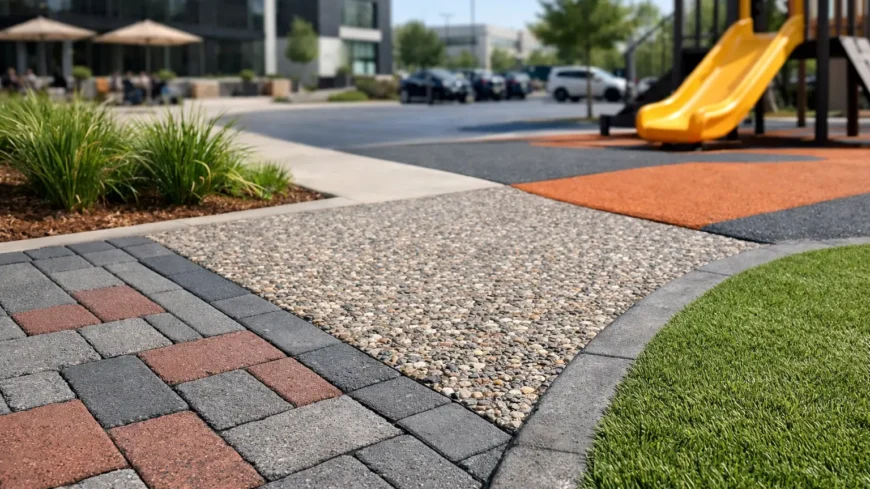
A worn, uneven car park does more than look neglected. It can damage vehicles, create trip risks, hold surface water and leave customers with a poor first impression before they reach your door. The best commercial surfacing options are those that suit how your site is used, cope with Scottish weather and can be installed with as little disruption as possible.
There is no single material that is right for every commercial project. A busy delivery yard has very different demands from a retail forecourt, school playground or private office car park. The right choice starts with traffic loading, drainage, ground conditions, budget and the standard of finish you need.
Best commercial surfacing options for your site
Tarmac and asphalt for high-use areas
Tarmac and asphalt are the leading choices for commercial car parks, access roads, private roads, industrial yards and forecourts. They provide a smooth, tidy finish, stand up well to regular vehicle movements and can cover substantial areas efficiently.
For most sites, asphalt is practical because it can be laid in a continuous surface with few joints. Fewer joints mean fewer places for water to enter and less opportunity for weeds or loose edges to develop. It is also straightforward to repair in localised sections if a future utility excavation or pothole issue occurs.
The important point is that the surface is only as good as the construction below it. Areas used by HGVs, refuse vehicles or repeated deliveries need a properly designed sub-base and suitable asphalt depth. Applying a thin surface layer over failing ground may improve the appearance briefly, but it will not solve cracking, rutting or standing water.
Tarmac is a particularly strong fit where access must remain clear. With sensible planning, work can often be phased so that part of a car park, road or yard stays operational while the next section is prepared and surfaced. The exact programme will depend on the size of the site, weather and curing requirements.
Tar and chip for rural roads and larger access routes
Tar and chip, also called surface dressing, combines a bitumen binder with loose aggregate chippings. It gives a textured, natural-looking finish with good grip, making it a worthwhile option for private estates, farm lanes, rural access roads and lower-speed commercial routes.
Compared with a fully asphalted surface, tar and chip can be a cost-effective way to refresh a large area. The aggregate also offers a choice of colours and finishes, which can help a road or forecourt sit more naturally within its surroundings.
There are trade-offs. The finish is intentionally rougher than tarmac, and a small amount of loose stone can remain after installation until the surface beds in. It is not usually the first choice for trolley-heavy retail areas, high-traffic urban car parks or sites where a very smooth appearance is expected. It works best on a sound, well-prepared base with appropriate drainage.
Concrete for exceptional loading and fixed-use areas
Concrete is often considered where heavy point loads, frequent turning movements or industrial operations would place unusual stress on a flexible asphalt surface. It can be suitable for loading bays, service yards, bin stores, vehicle wash areas and certain factory access points.
Its main strength is resistance to deformation under load. Where lorries regularly stop, turn or use stabiliser legs, concrete can avoid the rutting that may occur if the wrong asphalt specification is used. It can also handle fuel, oil and cleaning areas well when the correct finish and drainage design are provided.
However, concrete has higher initial costs in many cases and needs careful joint design. Repairs can be more visible and more involved than a local asphalt patch. It also requires adequate time to cure before full use. For sites that need a fast reopening, this programme requirement matters as much as the material cost.
Block paving for entranceways and defined spaces
Commercial block paving is best used selectively rather than across an entire heavy-use car park. It can create an attractive, premium entrance, pedestrian crossing, courtyard, parking bay edge or clearly defined pedestrian zone. Colour and laying patterns can help separate vehicle and foot traffic without relying solely on signs.
Because paving is made up of individual units, access to underground services can be simpler than with a continuous surface. Blocks can be lifted and reinstated following repairs, provided they have been laid on a solid foundation and are relaid correctly.
The downside is maintenance. Joints may allow weeds to establish if neglected, and poorly supported blocks can move under turning vehicles. For this reason, block paving is normally more suitable for lower-speed areas and architectural features than for a heavily loaded delivery yard.
Resin-bound surfacing for pedestrian-facing areas
Resin-bound aggregate is generally a specialist finish for paths, entrances, courtyards and light-use parking spaces. It offers a smart appearance and a broad choice of aggregate colours. When laid over a suitable permeable construction, it can also assist with surface-water management.
It is not a replacement for heavy-duty tarmac in every setting. The base must be stable, clean and correctly prepared, while the finished surface needs to suit the traffic expected. It is most valuable where appearance, pedestrian comfort and drainage are priorities, rather than where daily commercial vehicle movements are the main concern.
What determines the right commercial surface?
The material is only one part of the decision. A proper assessment should look at the whole site and identify what has caused any existing failure. Cracks around gullies, potholes in wheel tracks and ponding water each point to different problems.
Traffic is the first major consideration. Ask not only how many vehicles use the site, but what they weigh, where they turn and whether they stop in the same place. A small number of loaded lorries can do more damage than hundreds of cars. Delivery routes, refuse collection points, loading doors and tight turning circles all need extra attention.
Drainage is equally important, particularly in Scotland. Water that sits on the surface or enters cracks weakens the construction beneath. Effective falls, correctly positioned gullies and suitable channels direct water away before it becomes a maintenance issue. In some projects, permeable solutions or drainage upgrades may be required alongside resurfacing.
The existing ground and base condition should also be checked before any price is agreed. A sound surface with minor deterioration may be suitable for resurfacing. If the sub-base has failed, if the ground is soft or if levels are wrong, excavation and reconstruction may be the more dependable long-term answer. A cheaper overlay can become expensive if it fails prematurely.
Safety features should be planned with the surface
A finished surface needs to help people move around the site safely. White lining, marked bays, directional arrows, pedestrian crossings and hatched exclusion areas should be planned as part of the job, not added as an afterthought. Clear markings can reduce confusion in busy car parks and separate pedestrians from delivery traffic.
Consider visibility during dark mornings and wet afternoons. Entrance and exit markings, disabled bays, loading restrictions and speed-control measures need to remain clear under regular use. On sites open to the public, good lines and an even surface are practical risk-control measures as well as a better presentation of your business.
Potholes deserve early action. Water entering a small defect can quickly loosen more material, especially under repeated traffic. Timely repairs are safer, less disruptive and usually more economical than waiting until a larger section requires reconstruction. For urgent defects that affect access or public safety, a responsive emergency repair service can protect the site while permanent works are arranged.
Balance installation cost with whole-life value
The lowest quote is not always the lowest-cost option over the life of the surface. Compare like for like: excavation depth, sub-base material, edge restraints, asphalt specification, drainage works, finishing details and traffic management all affect the result. A quotation that simply says “resurface car park” does not tell you enough to judge durability.
Ask a contractor how the site will be prepared, how access will be managed and what guarantee is provided for the work. A clear written scope helps avoid surprises and allows you to compare proposals fairly. It should also explain any areas where underlying conditions cannot be confirmed until excavation begins.
Roadsafe Surfacing Ltd assesses commercial sites with the practical aim of delivering a surface that is safe, durable and appropriate for the traffic it will carry. Whether the job is a forecourt refresh, a larger car park rebuild or urgent pothole repair, the right preparation and specification make the difference.
Before choosing a surface, walk the site at its busiest time. Notice where vehicles queue, where pedestrians cross, where water collects and where damage keeps returning. Those details will point you towards a commercial surfacing solution that keeps your premises safer, smarter and easier to use for years to come.