
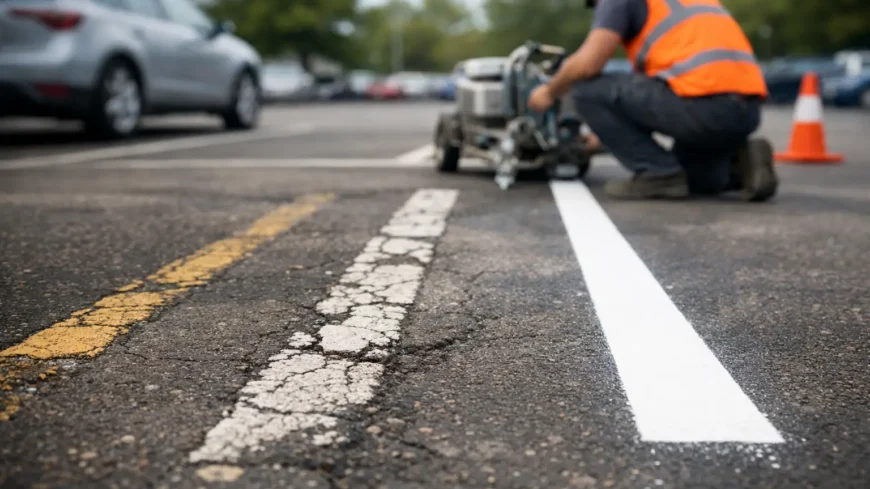
A car park can have sound tarmac and still create a poor first impression – or a genuine safety problem. Faded bays, broken arrows and unclear accessible spaces make drivers hesitate, park inconsistently and move through the site unpredictably. So, do car parks need remarking? If the existing lines no longer clearly guide vehicles and pedestrians, the answer is usually yes.
Remarking is not simply a cosmetic job. Clear white lining helps a site work as intended, protects available parking capacity and shows that the owner takes maintenance seriously. For busy commercial premises, residential developments, schools, retail sites and public-access areas, it is a practical part of managing risk and keeping disruption low.
When does a car park need remarking?
There is no single timetable that suits every site. A lightly used private car park may retain clear markings for several years, while a busy forecourt, medical practice or retail location can show wear much sooner. Traffic levels, turning movements, winter weather, road salt, drainage and the quality of the original surface all affect how long line markings last.
The straightforward test is visibility. If a driver cannot easily see where to park, which way to travel or where not to stop, the markings are no longer doing their job. Looking at the site from a vehicle is useful, but walk it as well. Lines that seem acceptable up close can disappear in rain, low light or headlamp glare.
Common signs that remarking should be planned include bay lines that have become patchy or worn away, arrows that are difficult to follow, yellow hatchings that no longer stand out, and stop or give-way markings that have faded. Poorly defined pedestrian crossings, loading areas, visitor bays and accessible parking spaces also need prompt attention.
It is worth acting before markings vanish completely. Once drivers begin creating their own parking arrangement, a site can quickly lose capacity. Cars may straddle bays, obstruct routes for deliveries or reduce room for emergency access. A relatively modest white lining project can prevent a much larger operational headache.
Why faded markings cause more than an appearance issue
Good car park markings create order. They separate moving vehicles from parked vehicles, identify pedestrian routes and make the best use of the available area. When the layout is clear, visitors spend less time searching, turning or second-guessing where they should be.
For facilities managers and business owners, that clarity can reduce complaints as well. Poorly marked bays often lead to disputes about parking, blocked entrances and misuse of designated spaces. At a customer-facing site, it can also affect perception. Fresh, crisp lines make an older surface look cared for, while faded paint can make an otherwise well-maintained premises appear neglected.
There is also a safety consideration. Car parks bring together pedestrians, cars, vans, cyclists and, in some cases, delivery lorries in a confined space. Directional arrows, crossing points, keep-clear zones and speed roundels help establish predictable movement. They cannot remove every risk, but they provide the visual information people need to make safer decisions.
Accessible bays deserve particular care. Where a site provides them, the bay outlines and symbols must remain easy to identify, with appropriate access space kept clear. If the markings are worn, confusing or routinely blocked, users may be prevented from using the facility properly. The exact layout should suit the site and any relevant requirements, rather than relying on a one-size-fits-all approach.
Remarking is also a chance to improve the layout
Many car parks are simply re-lined to their existing pattern. That is often the right choice where the layout works well and the surface is in good order. However, remarking provides an opportunity to assess whether the car park still meets current demand.
A business may have introduced more delivery vehicles, electric vehicle charging, visitor parking or disabled access requirements since the original layout was installed. A housing development may have recurring issues with bin lorries, narrow turning areas or cars blocking dropped kerbs. In these cases, copying worn lines exactly can repeat the same problems.
Before work begins, consider vehicle sizes, traffic flow, entry and exit visibility, pedestrian desire lines and the areas that need to remain clear. A revised layout may include clearer one-way arrows, a marked loading area, hatched exclusion zones or better-positioned pedestrian crossings. Small changes can make the site easier to use without requiring major surfacing works.
There is a trade-off, of course. Increasing the number of bays can be attractive, but cramped spaces may result in more door damage, awkward manoeuvres and blocked circulation routes. The best design balances capacity with safe, practical use.
Should you resurface before remarking?
Not always. If the asphalt or tarmac is structurally sound, clean and reasonably even, remarking can be completed as a standalone maintenance project. This is often the most cost-effective route for a car park where the main issue is faded paint.
However, white lining will not solve underlying surface defects. Potholes, open cracks, rutting, loose edges and failed drainage should be addressed first. Applying fresh markings over damaged tarmac can make the car park look better for a short time, but the defects will continue to worsen and may soon damage the new lines.
A proper inspection helps determine the right order of work. Localised pothole repairs and patching may be enough before remarking. Where widespread cracking or surface failure is present, resurfacing could offer better value over the long term. Carrying out repairs, surfacing and line marking as one planned programme also reduces repeat closures and avoids paying to reinstate markings after later repairs.
Choosing the right time for car park relining
Car park remarking is usually far less disruptive than resurfacing, but timing still matters. The surface must be suitably clean and dry for the chosen marking material, and weather conditions can affect application and curing. In Scotland, planning around rain and colder periods is particularly sensible.
For active sites, work can often be phased so that part of the car park remains available. Early mornings, evenings or quieter trading periods may suit retail and commercial premises. Clear temporary signage and a sensible traffic plan are essential, particularly where customers, residents or staff will still be using adjoining areas.
The best time is often before the site reaches a breaking point. Planned maintenance gives you more flexibility than an urgent job prompted by a near miss, complaint or inspection. It also allows the contractor to prepare the surface properly, set out the layout accurately and complete work with minimal interference to day-to-day operations.
What a professional remarking job should include
A lasting result depends on more than applying paint. The existing markings may need removal, blacking out or careful over-marking where the layout is changing. The surface should be swept and prepared so the material bonds correctly, while new bays and symbols need setting out accurately before application.
Quality marking materials and the right application method matter, but so does practical site knowledge. A contractor should assess the condition of the surface, advise on any repairs, confirm the intended layout and work safely around vehicles and pedestrians. For larger or more complex sites, a phased approach can keep access open while maintaining a tidy, controlled work area.
At Roadsafe Surfacing Ltd, car park white lining can be coordinated with tarmac repairs, pothole repair and resurfacing where required. That means property owners and site managers can deal with the condition of the whole car park rather than treating faded lines and damaged surfacing as separate problems.
How often should markings be checked?
A visual check every few months is sensible for most commercial and public-access sites, with closer attention after winter, major works or periods of heavy use. You do not need to wait for every line to fail. Recording areas that are becoming faint or repeatedly damaged makes it easier to schedule maintenance at the right time.
High-use areas usually wear first: entrance and exit lanes, turning points, loading bays, accessible spaces and areas close to ticket machines or building entrances. These can sometimes be refreshed selectively, although a full reline may provide a more consistent finish if the rest of the car park is also fading.
Clear markings are one of the simplest ways to make a car park safer, smarter and easier to manage. If drivers are guessing where to go, it is time to arrange an assessment and put the layout back to work.