
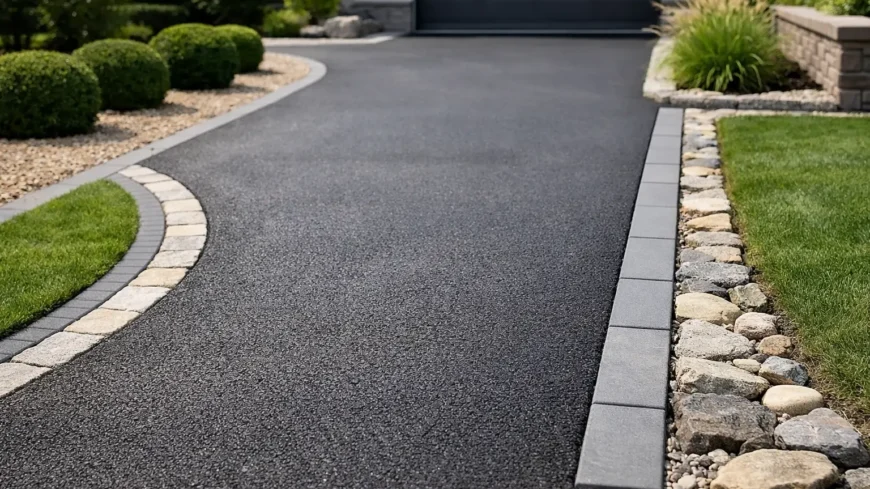
A tarmac drive can be laid properly, rolled properly and finished properly, then still look incomplete if the edge detail is wrong. That is why driveway edging ideas tarmac owners choose matter more than many people expect. The right edging does not just sharpen the look of the drive. It helps hold the surface in place, protects the perimeter from breaking away and creates a cleaner transition to lawns, paths, walls or planting.
For homeowners, edging is often about kerb appeal and reducing maintenance. For commercial sites, it is also about strength, traffic control and making the surface easier to manage over time. In both cases, the best choice depends on how the drive is used, what sits beside it and whether you want the edging to stand out or blend in.
Why edging matters on a tarmac driveway
Tarmac performs well because it is flexible, durable and cost-effective, but the edges are naturally more vulnerable than the middle. Without proper restraint, the sides can start to crumble under pressure from tyres, weather and water movement. This is especially common where cars regularly turn near the edge or where the drive runs alongside soft ground.
A solid edge gives the tarmac something to sit against. It improves definition, helps the driveway keep its shape and can reduce the risk of surface breakdown at the sides. It also makes maintenance simpler. Grass is less likely to creep over the line, gravel stays where it should and sweeping becomes easier.
There is also the visual side. A drive with no clear border can look unfinished, even when the surfacing itself is sound. A well-chosen edge gives the whole area a more deliberate, professional finish.
Driveway edging ideas tarmac surfaces suit best
The strongest edging choices are usually the most practical ones. That does not mean every drive needs heavy kerbs or bold contrast. Some properties benefit from a crisp formal edge, while others suit a softer or more traditional look.
Block paving edging
Block paving is one of the most popular choices because it gives you a clean line and plenty of flexibility in colour and finish. You can frame a black tarmac drive with charcoal blocks for a subtle border, or use a lighter shade to create more contrast.
This option works well on domestic driveways because it adds visual interest without overpowering the surface. It can also tie the driveway into paths, patios or entrance steps if those areas already use block paving. From a practical point of view, blocks provide reliable edge restraint when installed correctly on a solid base.
The trade-off is that block edging needs to be laid accurately. Poorly aligned blocks or weak bedding will show up quickly, and on a large commercial area the decorative effect may not justify the extra detail work.
Granite setts
Granite setts are a stronger, more premium-looking option. They suit older properties, country homes and projects where a more substantial edge is wanted. Against smooth black tarmac, granite gives a clear visual boundary and a durable physical restraint.
Setts cope well with repeated traffic and harsh weather, which is one reason they are often chosen for entrances and heavier-use areas. They are particularly effective where the driveway slopes or where there is a need for a more robust perimeter.
They do, however, cost more than basic edging options and need skilled installation. If the aim is a low-cost upgrade, granite may not be the first choice. If the aim is long-term durability with a stronger finish, it is often money well spent.
Brick edging
Brick edging gives a traditional appearance and can work well on period properties or homes with brick walls and red-toned features. It softens the industrial look that tarmac can sometimes have and helps the drive feel more connected to the house.
The key is choosing bricks rated for external ground use rather than standard house bricks. Ground conditions, moisture and winter weather can be unforgiving. Used correctly, brick edging can look smart and characterful. Used incorrectly, it can weather unevenly and create more maintenance than expected.
Concrete kerbs
Concrete kerbs are a straightforward, dependable solution, especially for larger drives, shared access roads, car parks and commercial sites. They are built to contain the edge of the surfacing and stand up to repeated pressure.
Visually, concrete kerbs are more functional than decorative, although there are different profiles and finishes available. They suit projects where performance comes first and where edging may also be guiding vehicle movement or separating pedestrian areas from traffic.
For domestic settings, some people find them too hard-looking unless they are balanced by softer landscaping. For commercial environments, that clean, practical look is often exactly the point.
Recessed kerbs for a neater finish
If you want the strength of a kerb without a raised boundary, recessed kerbs are worth considering. They sit lower and create a tidy, restrained edge that does not dominate the look of the driveway.
This is a good option when you want a crisp border but still need easy access across the full width of the drive. It can also help where bins, trailers or foot traffic regularly cross the edge.
Natural stone edging
Natural stone gives a more bespoke finish and works particularly well on higher-end properties. Sandstone, whinstone and similar materials can complement garden walls, paving and traditional Scottish landscapes.
The appeal here is character. No two stones look exactly the same, so the result feels less manufactured. That said, natural stone edging is not always the most economical route, and some finishes will need more thought if you want a very formal, uniform appearance.
Matching the edging to the driveway setting
The best driveway edging ideas tarmac projects use are usually the ones that suit the surroundings, not just the surfacing. A narrow town driveway has different needs from a sweeping rural entrance. A busy commercial forecourt needs a different level of restraint from a private drive used by two cars.
If the drive runs beside a lawn, you may want edging that keeps soil and grass clearly back from the tarmac. If it borders flower beds, a slightly raised edge can help contain mulch and planting. If the driveway meets a pavement or access road, the edging may need to handle frequent turning and heavier loading.
Drainage also matters. Edging should never trap water on the surface. In some cases, the design needs to work alongside channels, gullies or falls so water can drain away properly. Appearance is important, but water management and structural support come first.
Contrast or blend in?
There is no single right answer here. A contrasting edge makes the driveway shape stand out and can give a plain tarmac surface more definition. This works well if you want the driveway to look more designed and more obviously finished.
A blended edge is subtler. Dark blocks, dark setts or understated kerbs keep the look simple and practical. This approach suits modern properties and larger areas where too much contrast can feel busy.
For commercial properties and public-facing sites, contrast can also have a practical safety benefit by making edges more visible. For homes, it is more about taste and the overall style of the property.
What to avoid when choosing edging
The main mistake is treating edging as an afterthought. If it is added without considering levels, drainage or vehicle use, it can create weak points rather than solve them. Decorative materials that are not designed for traffic conditions are another common problem.
Poor installation is just as risky as poor material choice. Even good edging will fail if the base is not prepared properly or if the line is not secure enough to support the tarmac edge. Gaps, movement and cracking usually start small, then become expensive to put right.
It is also worth avoiding over-design. Too many colours, shapes or materials can make the driveway look disjointed. In most cases, one strong edging choice is better than several competing ideas.
Choosing an edge that lasts
If long-term value is the priority, focus on strength first, then appearance. Ask how the drive will be used, how much turning traffic it sees, what sits beside it and how much maintenance you are willing to take on. A tidy border that fails after a short period is not a saving.
For most homes, block paving, granite setts or quality kerbing give the best balance of appearance and support. For commercial and heavier-duty areas, kerbs and stronger sett-style restraints usually make more sense than decorative borders alone.
A properly edged tarmac driveway looks better on day one, but the real benefit shows up later. The surface stays cleaner at the margins, the shape holds, and the whole area keeps that finished, well-built look for longer. If you are investing in new surfacing, the edge detail is not the extra. It is part of doing the job properly.
If you are weighing up options for your property, the best place to start is not with colour charts or catalogues, but with how the driveway needs to perform in real use. Get that right, and the finish will follow.