
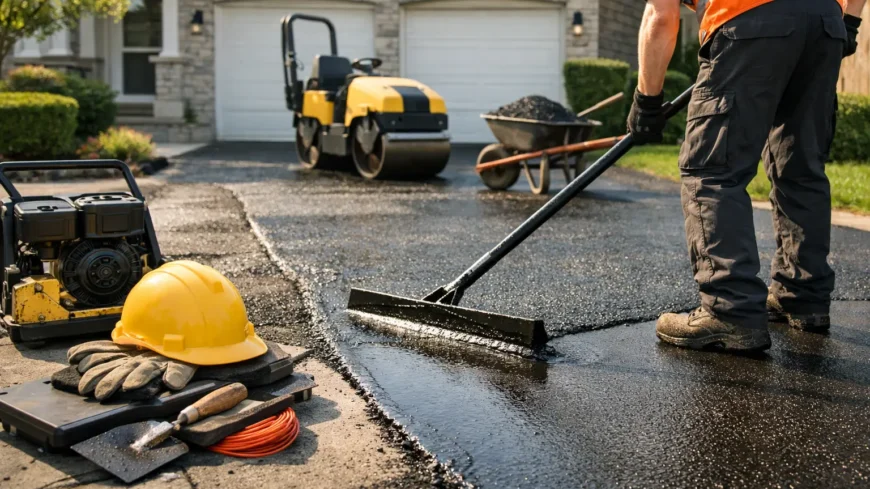
A driveway rarely fails all at once. It starts with a patch that holds water, a few cracks near the edge, loose stones where tyres turn, or a surface that simply looks tired and worn. That is usually the point where a driveway resurfacing buyer guide becomes useful – not when the damage is beyond repair, but when you still have options and can make a sensible decision before costs climb.
Resurfacing can be a smart investment, but it is not the right answer for every driveway. The best result comes from knowing what sits underneath the surface, what level of traffic it needs to handle, and whether you are paying for a proper long-term fix or a cosmetic short cut.
What this driveway resurfacing buyer guide should help you decide
Most buyers are really choosing between three things: repair, resurfacing, or full replacement. These are not interchangeable, and the wrong choice usually shows up within a year or two.
If the base is still sound and the main issue is surface wear, resurfacing often gives the best balance of cost, appearance and lifespan. If there are isolated problem areas, targeted repairs may be enough. But if the driveway has widespread sinking, major cracking, drainage issues or a failing foundation, resurfacing over the top can simply hide the problem for a short time.
That is why a proper site assessment matters. A good contractor should be able to explain not just what they recommend, but why. If the answer is vague, or every driveway somehow needs exactly the same solution, that should raise questions.
When resurfacing makes sense
Resurfacing is usually worth considering when the driveway is structurally stable but the top layer has reached the end of its best years. You may have fading, minor surface cracking, fretting, shallow dips, or areas that no longer look clean and uniform. In those cases, a new wearing course can refresh the appearance and restore function without the higher cost and disruption of digging everything out.
For many properties, tarmac and asphalt resurfacing are the practical choice because they cope well with regular vehicle traffic, give a neat finish, and can be laid efficiently. For residential driveways, they also suit a wide range of property styles without becoming high maintenance.
That said, resurfacing is not a cure-all. If water is sitting against the house, if heavy vehicles have broken down the edges, or if sections of the driveway move under load, the issue may go deeper than the top layer.
Signs you may need more than resurfacing
A surface can look worn and still be basically sound. It can also look acceptable from a distance while the structure underneath is already failing. The difference matters.
Watch for long structural cracks rather than small surface lines, repeated potholes in the same spot, rutting where vehicles sit or turn, crumbling edges, and standing water that never seems to improve. These often point to weakness in the sub-base or poor drainage design. In that situation, the cheapest quote for resurfacing may become the most expensive decision.
A dependable contractor will tell you when resurfacing is not enough. That honesty is worth paying attention to because proper groundwork is what supports the finished surface for years to come.
Choosing the right material for the job
There is no single best surface for every driveway. The right choice depends on use, budget, appearance and how much maintenance you are prepared to take on.
Tarmac remains one of the strongest all-round options for domestic and commercial settings. It is durable, cost-effective and well suited to the Scottish climate when installed properly. It also gives a clean, professional finish and is relatively quick to lay.
Asphalt is similar in many practical ways and is often chosen where a smooth, hard-wearing finish is required. For busier entrances, shared access routes or sites with regular traffic movement, this can be especially useful.
Tar and chip can suit longer rural driveways or larger areas where buyers want a more traditional appearance and good value across a broad surface. It is not always the first choice for every home, but in the right setting it can perform well.
The key point is that material choice should follow the site conditions, not just personal preference. A surface that looks good on one property may not be the right fit for another.
Driveway resurfacing buyer guide to pricing
Price matters, but the lowest figure on paper does not tell you much by itself. Resurfacing costs vary depending on area size, current condition, preparation work, material choice, access for plant and machinery, edging requirements, drainage adjustments and whether any repairs are needed before the new surface is laid.
Smaller driveways often have a higher cost per square metre because fixed labour and transport costs are spread across less area. Larger sites can look better value, but they may involve more prep work than expected. Commercial sites and shared-use spaces also tend to require extra planning around access and safety.
When comparing quotes, ask what is actually included. Does the price cover cleaning and preparation, localised repairs, edge work, waste removal and final finishing? Or are those likely to appear later as extras? A clear quotation is usually a sign of a well-run contractor.
What to ask before you agree to the work
A good buyer does not need to know every technical detail, but you should feel confident asking practical questions. How much of the existing surface will be prepared before resurfacing? Will failed sections be cut out and repaired first? How will water drain once the work is complete? How long before vehicles can use the driveway again? What guarantee is offered?
You should also ask who will carry out the work. Some companies quote the job and then pass it elsewhere. Others manage the work directly with their own surfacing teams and equipment. For many buyers, that accountability makes a real difference.
If the site is commercial, public-facing or part of a managed property, ask how disruption will be controlled. Timings, access planning and safe segregation matter just as much as the final finish.
Red flags when comparing contractors
The obvious warning sign is a quote that seems too good to be true. In surfacing, that often means corners are being cut on preparation, thickness, materials or aftercare. A surface can look tidy on day one and still fail early if the groundwork has been rushed.
Another red flag is pressure selling. A professional contractor should be able to inspect the site, explain the options and give you time to consider them. You are buying a surface that needs to last, not a same-day impulse purchase.
Be careful with vague promises as well. Words like high quality and best price mean very little unless they are backed up by detail, guarantees and a clear scope of works. Buyers should expect straight answers and a contractor willing to stand over the job.
Residential and commercial buyers need different things
Homeowners usually focus on kerb appeal, durability and value. They want a driveway that looks smart, handles daily use and does not become a maintenance problem. Speed matters too, especially where access to the house is affected.
Commercial buyers, facilities managers and developers tend to look at resurfacing through a wider lens. Surface performance, site safety, drainage, traffic flow, minimal disruption and long-term maintenance all matter. A clean finish is important, but reliability under use is what protects the investment.
That is why experience across both domestic and commercial surfacing can be valuable. The standards required on roads, car parks, forecourts and public-access areas often translate into better planning and execution on smaller jobs as well.
Timing, weather and aftercare
In Scotland, timing can affect both programme and performance. Surfacing work needs suitable conditions, and while experienced contractors can work efficiently across much of the year, poor weather can delay certain stages or affect curing times.
You should be told how long the surface needs before foot traffic and vehicle use. Using it too early can mark or weaken the finish. Aftercare is usually straightforward, but it still matters. Keep the surface clear, avoid unnecessary stress while it settles, and deal with small issues before they become larger repairs.
A driveway should not just look better after resurfacing. It should drain properly, feel solid under load and hold up to real use.
Making the right decision
The best buying decision is rarely about choosing the cheapest option or the thickest specification. It is about matching the solution to the condition of the driveway and the way the space is used.
If the existing base is good, resurfacing can give excellent value and a strong visual improvement. If the structure is failing, replacement may be the more responsible route. And if only sections are damaged, targeted repair work could buy you more time before larger work is needed.
A company such as Roadsafe Surfacing Ltd should be able to assess that honestly, price it clearly and carry it out with minimal fuss. That is what buyers should expect from any contractor they invite onto their property or site.
A driveway is one of those things you only notice properly when it starts letting you down. Get the decision right now, and you will spend the next several years not thinking about it at all – which is usually the best result any surfacing job can deliver.