
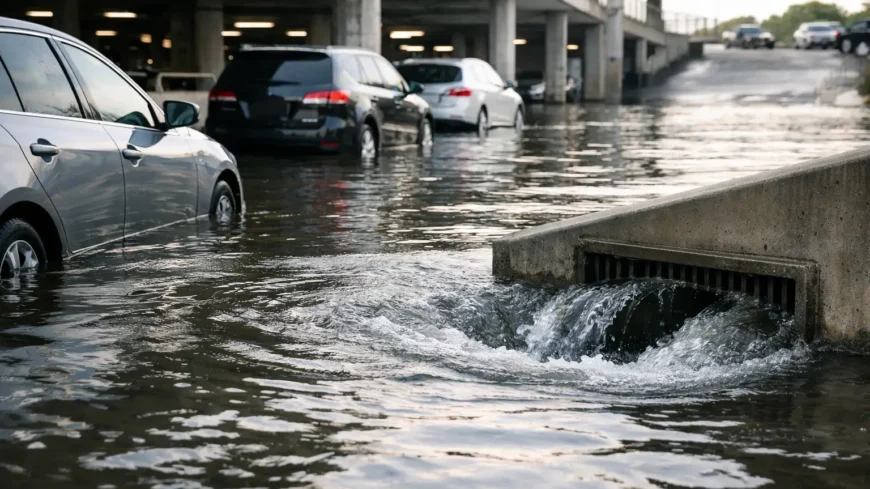
A car park that holds water after every spell of rain is more than an inconvenience. It creates slip risks, hides potholes, weakens the surface and gives customers, staff and visitors a poor first impression. This flooded car park case study looks at how a practical drainage-led resurfacing approach can turn a problem surface into a safer, dependable area built for everyday traffic.
The example reflects the type of issue commonly found at commercial premises across Scotland: a tired tarmac car park with standing water around parking bays, ponding at the entrance and deterioration along the edges. The answer was not simply to lay new asphalt over the top. The levels, drainage route and foundation condition all needed to be addressed first.
The problem: standing water and a failing surface
The site was a busy mixed-use car park serving staff, visitors and delivery vehicles. Rainwater collected in several low points, particularly along the centre of the parking area and near the pedestrian access route. During heavy rainfall, the water remained long after the rain had stopped.
Repeated ponding had started to break down the existing tarmac. The surface was fretting at the edges, small potholes had formed, and vehicle tyres were carrying loose material across the car park. Water was also sitting beside kerbs, increasing the chance of sub-base failure below the surface.
For the property manager, the priorities were clear: improve safety, stop the damage spreading, maintain access wherever possible and avoid paying for a short-term patch that would fail after another winter.
Flooded car park case study: finding the real cause
A flooded car park is not always caused by one blocked gully. In this case, several issues were working together. The existing falls were too shallow in places, so water did not naturally move towards the drainage points. Some gullies were positioned away from the lowest areas, while worn sections of tarmac allowed water to penetrate through cracks and joints.
The investigation began with a site survey to check levels, identify drainage runs and assess the condition of the surface and underlying construction. This stage matters because a car park can look flat to the eye while still containing enough unevenness to hold significant amounts of water.
The contractor also considered how the site was used. Cars, vans and occasional heavier delivery vehicles placed different loads on different parts of the surface. Areas near entrances, turning points and loading access required a stronger construction than lightly used parking bays. A drainage plan that works on paper must also suit kerb lines, existing services, pedestrian routes and the practical movement of vehicles.
The repair plan: drainage before surfacing
The agreed approach combined local excavation, drainage improvements, regrading and new surfacing. This dealt with the cause of the flooding rather than covering the symptoms.
First, the damaged sections of tarmac were removed and the weak areas of sub-base were excavated. Any soft or waterlogged material was taken out until a stable formation was reached. Rebuilding on a poor foundation would have risked early cracking and renewed settlement, regardless of the quality of the new asphalt.
A properly compacted aggregate sub-base was then installed to provide strength and support. The finished levels were set to create controlled falls towards the drainage points. The fall does not need to be dramatic, but it must be consistent enough for water to run off rather than settle in shallow depressions.
New and adjusted drainage channels were included where required, with gullies positioned to collect water from the revised surface levels. Existing drainage was checked and cleared before the final surfacing work began. There is little value in directing rainwater to a system that cannot carry it away.
Once the base and drainage work had been completed, the car park was surfaced with suitable tarmac in a sequence that kept disruption to a minimum. Where possible, the work was phased so parts of the site could remain accessible. Final compaction produced a close, even finish designed to stand up to regular vehicle movements and Scotland’s wet weather.
Why resurfacing alone would not have solved it
A new tarmac layer can improve appearance quickly, but it cannot correct poor drainage levels underneath. If water is still being directed to the wrong place, it will simply pond on the fresh surface. In some cases, an overlay may even reduce the depth at thresholds or kerb lines, creating new drainage problems elsewhere.
This is why the best solution depends on the condition of the existing car park. A surface with only minor local dips may be suitable for targeted patching and regrading. A car park with extensive cracking, weak foundations and failed drainage will usually need more substantial reconstruction in the affected areas.
The right balance is important. Full excavation of an entire car park is not always necessary, and it may not be the most cost-effective option. Equally, repeated pothole repairs can become poor value when the underlying structure is saturated and failing. A clear survey allows the client to invest where it will make a lasting difference.
Safer access and a better finish
The completed surface gave water a clear route to the drainage system, reducing standing water around bays, entrances and walkways. That immediately improved day-to-day safety for pedestrians and drivers, particularly during darker winter mornings and evenings.
The work also provided the opportunity to refresh the car park layout. Once the tarmac had cured, white lining could be applied to define parking bays, accessible spaces, traffic flow and pedestrian areas. Clear markings help drivers use the space properly and reduce unnecessary manoeuvring over vulnerable edges.
For commercial sites, this is not just about appearance. A well-drained, clearly marked car park helps reduce complaints, limits trip hazards and demonstrates that the premises are being properly maintained. It can also help protect the investment in the building and surrounding grounds by keeping surface water away from entrances and foundations.
Protecting the repair after the work is complete
Even a correctly built car park needs basic maintenance. Gullies and channel drains should be cleared regularly, especially after autumn leaf fall or severe weather. Debris can block inlets quickly and recreate the same ponding issue the resurfacing was designed to prevent.
Small cracks should be dealt with before water reaches the base layers. Early repairs are normally quicker, less disruptive and less expensive than waiting for potholes to form. Site managers should also keep an eye on new low spots, kerb damage and areas used by heavy vehicles, as these can indicate that local repairs are needed.
Where winter gritting is carried out, avoid damaging the surface with unsuitable equipment or pushing debris into drainage channels. Good maintenance is not complicated, but it protects the drainage and surfacing work for longer.
Choose a contractor that looks below the surface
A flooded car park needs a contractor who will assess drainage, levels, ground conditions and traffic use together. The cheapest quote is rarely the best value if it only hides the problem for a season. Roadsafe Surfacing Ltd provides practical surfacing and groundwork solutions designed around safe access, durable finishes and minimal disruption to active sites.
If your car park regularly holds water, do not wait until the surface breaks up or an accident happens. A proper inspection can identify whether targeted drainage work, resurfacing or local reconstruction will give you the most reliable result. The goal is simple: rain should leave the car park, not become part of it.