
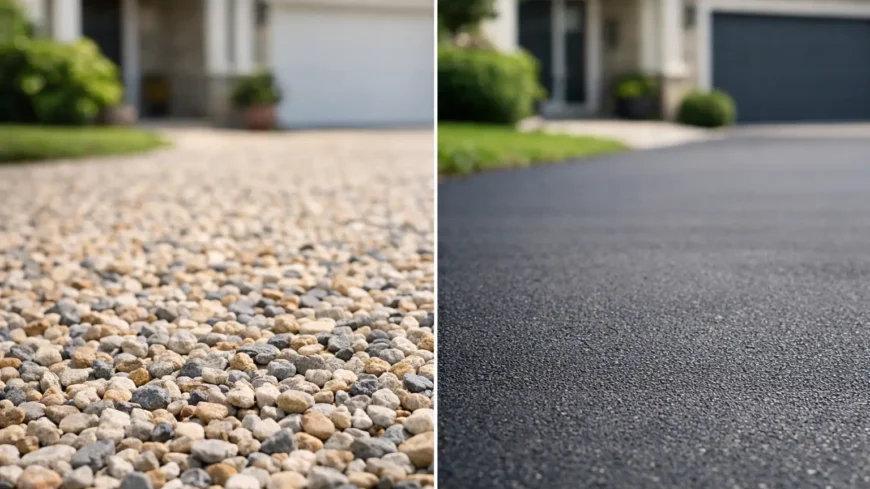
A driveway has to cope with far more than parked cars. In Scotland, it faces persistent rain, winter frost, muddy tyres, turning vehicles and daily foot traffic. When comparing gravel versus tarmac driveways, the right answer is not simply about the cheapest initial quote. It is about how the surface will perform at your property, how much maintenance you are prepared to take on, and whether the groundwork beneath it has been properly designed.
Gravel can suit rural homes, longer private drives and properties where drainage is the priority. Tarmac is often the stronger choice for homeowners and commercial sites that need a clean, stable, low-maintenance surface. Both can look smart and last well, but they do different jobs.
Gravel versus tarmac driveways: the key differences
The most visible difference is the finish. Gravel has a traditional, informal appearance, with a choice of stone colours and sizes to suit the character of a property. Tarmac provides a smooth, consistent surface that looks neat, handles vehicles confidently and gives a more finished entrance to a home, car park or forecourt.
The practical difference lies below the surface. A good gravel driveway needs a stable, well-compacted sub-base, effective edging and a membrane to help separate stone from the ground beneath. Without these, gravel migrates, ruts form under tyres, and the surface soon becomes untidy.
A tarmac driveway also relies on sound preparation. The existing ground must be excavated to the correct depth, a suitable stone base installed and compacted, and drainage allowed for before the tarmac is laid. Tarmac will only be as dependable as its foundations. A cheap surface laid over weak ground can crack, sink or hold water regardless of the material used.
Cost: initial price versus lifetime value
Gravel is often less expensive to install, particularly on a large driveway with straightforward access. The material itself is generally cost-effective, and it can be laid without the specialist paving equipment required for tarmac. That can make it attractive when budget is the main concern.
However, the lowest installation cost is not always the lowest long-term cost. Gravel requires periodic topping up, levelling and raking. Stone may be carried onto pavements and roads by tyres, pushed into borders, or displaced from busy turning areas. If the driveway has a slope, loose stone is more likely to move downhill during heavy rain or when vehicles brake and turn.
Tarmac normally costs more at the outset because of the excavation, sub-base work, machinery and skilled laying involved. In return, it provides a durable continuous surface that needs much less routine attention. For a busy household, rental property, office frontage or customer car park, that reduced maintenance can make tarmac better value over its service life.
The honest answer is that pricing depends on access, excavation depth, drainage requirements, the condition of the existing surface and the size of the area. A proper site assessment matters more than a headline price per square metre.
Drainage and Scottish weather
Drainage should be a deciding factor, not an afterthought. Gravel is naturally permeable, allowing rainwater to pass through the surface into the layers below. Where ground conditions are suitable, this can reduce standing water and support a more natural drainage approach.
That does not mean every gravel driveway drains well. If it is laid over compacted clay, poorly designed sub-base layers or a blocked outlet, water can still sit below the stone and soften the ground. This leads to wheel ruts, puddles and uneven areas. Edging and falls still need careful planning.
Tarmac is largely impermeable, so surface water must be managed deliberately. A driveway should be formed with suitable falls that guide water towards a drainage channel, soakaway or another approved drainage arrangement. On a properly prepared installation, this is highly effective and helps keep the entrance clean and usable through wet weather.
For properties in Edinburgh, East Lothian and across Scotland, frost resistance also matters. Water entering weak or poorly compacted layers can freeze and expand, contributing to movement and cracking. A professionally built base helps both gravel and tarmac withstand seasonal conditions, while prompt repairs prevent small defects becoming larger ones.
Maintenance and day-to-day use
Gravel needs regular attention to keep it looking right. Most homeowners will need to rake displaced stone back into place, remove weeds where they appear, and add fresh gravel over time. Snow clearing can also be awkward, as a shovel or snow blade can catch and pull stone away with it.
It can be noisy too. Some people like the sound of tyres on gravel because it gives a sense of arrival and can alert occupants to visitors. Others find it inconvenient, especially close to doors, bedrooms or shared access routes.
Tarmac is much easier to live with on a daily basis. It is smooth underfoot, easier for pushchairs, wheelie bins and bicycles, and more accessible for people with limited mobility. It is also simpler to sweep, clear of leaves and maintain in winter. Occasional cleaning and early attention to cracks or damaged edges will help extend its life.
A tarmac surface can soften slightly in extreme heat and may be marked by heavy point loads, such as skips or vehicle stands. These are manageable considerations, but they are worth discussing if the area will take regular lorry deliveries, plant equipment or unusually heavy vehicles.
Appearance, security and kerb appeal
Gravel offers flexibility in colour and texture. Golden, grey, buff and red-toned aggregates can complement stone cottages, rural properties and more traditional landscaping. It can also be a good choice where a large drive needs to blend into its surroundings rather than stand out.
Tarmac gives a crisp, professional appearance that works particularly well with modern homes, commercial entrances and high-use areas. Clean edges are important. With kerbs, block edging or contrasting borders, a tarmac driveway can look purposeful rather than plain.
Security is another practical consideration. Gravel can make approaching footsteps and vehicles more audible, which some homeowners value. Tarmac does not provide that benefit, but it offers clearer visibility for markings, parking bays and safe walking routes where a driveway also serves visitors or staff.
For commercial premises, surface appearance affects more than kerb appeal. A clean, even entrance helps reduce trip risks, supports accessible movement and gives customers confidence before they step through the door. In these settings, tarmac is usually the more practical choice.
When gravel is the better choice
Gravel is well suited to long drives, rural homes, lower-traffic areas and properties where a permeable-looking, traditional finish is preferred. It can be a sensible solution where budget needs to be controlled and the owner is happy to carry out routine upkeep.
It also works well as part of a wider landscaping scheme, especially when firm edging is used to define planting areas and stop loose stone spreading. But it is less suitable for steep slopes, frequent vehicle turning, homes needing step-free access, or sites where loose stone could be brought onto public roads.
When tarmac is the better choice
Tarmac is usually the stronger option for busy driveways, shared access roads, car parks, forecourts and homes that want a clean surface with minimal ongoing maintenance. It is particularly effective where vehicles turn regularly, where access needs to remain reliable in wet weather, or where smooth movement matters.
It is also a practical choice when an old driveway is breaking up, collecting water or developing potholes. Rather than covering visible defects, the right approach is to identify the cause, rebuild failed areas where needed and install a surface designed for the expected traffic.
Roadsafe Surfacing Ltd takes this contractor-led approach, with preparation, drainage and finishing treated as essential parts of the job rather than optional extras. The result should be a driveway that looks good on completion and continues to perform when the weather turns.
Make the decision from the ground up
Before choosing either material, consider the slope of your drive, the ground beneath it, the number and weight of vehicles using it, how water currently drains, and the finish you want in five or ten years. A gravel drive that suits a quiet country property may become a maintenance burden outside a busy family home. A tarmac surface may cost more initially, but can be the simpler and more dependable option for daily use.
The best driveway is not the one that looks cheapest on day one. It is the one built on the right foundation, with drainage that works and a surface suited to how your property is actually used. A clear, site-specific quotation will give you the confidence to choose properly rather than compromise on the parts that matter most.