
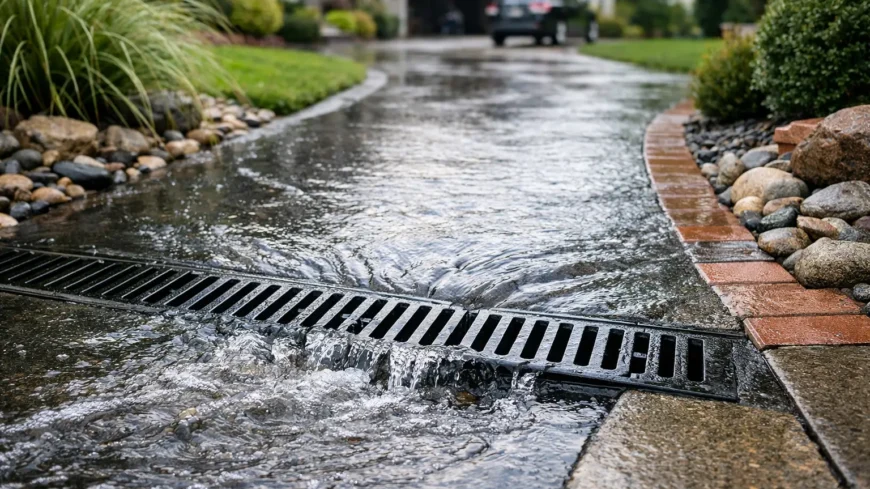
A driveway that sheds water in the wrong direction rarely stays a small problem for long. One spell of heavy rain can leave standing water by the garage, wash loose material into the road, or send runoff straight towards the house. If you want to improve driveway drainage runoff, the right fix depends on where the water starts, where it ends up, and what your surface is doing under pressure.
For some properties, the issue is obvious – the drive falls towards the building, the water has nowhere to go, and puddles sit for hours. On others, runoff only becomes a problem after years of wear, when dips, cracks or failing edges interrupt how water should move across the surface. Either way, drainage is not just about convenience. It affects safety, surface life, appearance and, in some cases, the structure nearby.
Why driveway runoff becomes a problem
Driveways take more punishment than many people realise. Cars turn in the same places, braking loads stress the surface, and water exploits every weak point. Once runoff stops moving cleanly away, it starts to find low spots, soft edges and joints. In winter, that gets worse as trapped water freezes, expands and opens the surface further.
Poor runoff can lead to several linked issues. Puddling creates slip hazards and weakens the top layer. Water flowing over the edge can wash out borders or damage adjacent landscaping. If runoff reaches walls, thresholds or garages, the repair bill quickly stops being about the driveway alone. On commercial sites, poor drainage also creates a maintenance and liability problem, especially around pedestrian routes and access points.
The cause is not always the same. Sometimes the original fall was never sufficient. Sometimes the driveway was added without proper drainage planning. In other cases, the surface has simply settled over time. That is why a proper answer starts with diagnosis, not guesswork.
Improve driveway drainage runoff by fixing the fall
The single biggest factor in driveway drainage is the fall, also called the gradient. Water needs a clear route away from buildings and towards a suitable discharge point. If the driveway is too flat, or worse, slopes towards the property, surface water will always be difficult to control.
A minor issue can sometimes be corrected by localised resurfacing to remove low spots and restore the flow line. That works well where the base remains sound and the problem is confined to a shallow depression. It is a practical option for tarmac and asphalt surfaces that have worn unevenly but do not need full reconstruction.
If the levels are fundamentally wrong, patch repairs will not solve it for long. In those cases, the better investment is to regrade the drive properly. That may involve lifting the existing surface, adjusting the sub-base and laying a new finish with the right falls built in. It costs more at the outset, but it prevents years of recurring puddles, patching and edge failures.
There is a trade-off here. A steeper fall improves runoff, but too much slope can affect vehicle use, pedestrian safety and the way water discharges at the bottom of the drive. The aim is controlled movement, not simply pushing the problem somewhere else.
When channels and drains are the better answer
Not every driveway can rely on slope alone. Tight sites, entrances near public footpaths, and properties with level thresholds often need a drainage system to intercept water before it becomes a problem.
A channel drain is one of the most effective options where runoff needs to be collected across the width of a driveway. Installed at the right point, usually in front of a garage or near the lower end of the drive, it captures surface water and directs it into a suitable drainage outlet. For many homeowners and site managers, this is the cleanest way to deal with water that would otherwise pool or run towards a building.
The important part is not just fitting a channel. It has to sit at the correct level, tie neatly into the surfacing, and discharge properly. A drain with no effective outfall is just a narrow trough that fills up in bad weather. The surrounding surface also needs to lead water into it. If the levels are wrong on either side, the drain will underperform no matter how well made it is.
On larger commercial forecourts or shared access areas, a more detailed drainage layout may be needed, particularly where heavy traffic or a wide catchment area increases water volume. In those cases, capacity matters just as much as placement.
Permeable surfaces can reduce runoff at source
If you are planning a new driveway, or replacing one that has reached the end of its life, permeable construction is worth considering. Rather than pushing all surface water to the edge, a permeable system allows water to pass through the surface into a designed sub-base below.
This approach can be very effective on the right site because it reduces visible runoff from the start. It can also help where conventional drainage connections are limited. That said, it is not suitable everywhere. Ground conditions, expected traffic, available build-up depth and maintenance all matter. A permeable surface that clogs up or sits over poor ground will not perform as intended.
For many properties, especially where a durable contractor-grade finish is the priority, a standard tarmac or asphalt driveway with proper falls and drainage details remains the more practical choice. The best solution is the one that suits the site, not the one that sounds best on paper.
Surface damage often makes runoff worse
Even a driveway that was built correctly can start holding water once the surface begins to break down. Cracks, rutting, edge collapse and settlement all interrupt the natural path of runoff. Water then sits where it should be moving, and deterioration speeds up.
This is common on older drives and on surfaces that were laid over a weak base. You may notice that puddles form in wheel tracks first, or that one edge has dropped and now traps water along the side. These are not just cosmetic faults. They usually signal that the surface profile has changed enough to affect drainage.
In that situation, sealing over the problem is rarely enough. The repair needs to match the cause. If the top layer has worn but the structure underneath is still sound, resurfacing may be sufficient. If the base has failed, rebuilding the affected area is the more reliable fix. A good contractor will tell you which applies, rather than selling a surface treatment that only hides the issue temporarily.
Don’t ignore the edges, gullies and surrounding ground
Driveway drainage is often affected by features around the surface, not just the surface itself. Raised edging can trap water instead of guiding it away. Blocked gullies stop drainage systems from doing their job. Adjacent flower beds or verges can wash material back onto the drive and interfere with flow.
That is why inspection matters. A driveway may appear to have a drainage problem when the real issue is a blocked outlet or poor maintenance around the perimeter. Equally, if water is constantly spilling off the drive and eroding the sides, the drainage route may be too aggressive or badly controlled.
Regular upkeep goes a long way here. Keeping channels clear, removing debris, and dealing with small defects early can stop a manageable issue turning into a reconstruction job. For busy commercial sites, routine maintenance is usually far cheaper than reactive repair after prolonged water damage.
Choosing the right fix for your property
The best way to improve driveway drainage runoff is to match the solution to the site conditions. A domestic driveway with one low patch might only need localised correction and a tidy resurfacing finish. A larger entrance with poor overall levels may need full regrading. A forecourt or access road may require channels, gullies and stronger construction to cope with higher runoff volumes and traffic loads.
This is where experience makes a difference. Drainage work should not be treated as an add-on after the surfacing is planned. It needs to be part of the build from the outset, because falls, edges, drainage points and surface type all work together. At Roadsafe Surfacing Ltd, that practical approach matters whether the job is a private driveway or a larger commercial area where safety, durability and minimal disruption are non-negotiable.
If you are seeing standing water, runoff towards the house, or repeated surface breakdown after rain, the sensible next step is to have the levels and condition assessed properly. The sooner the water is controlled, the more likely you are to avoid bigger repairs later. A driveway should work hard, drain cleanly and stay safe in all weathers. When it does, everything around it performs better too.