
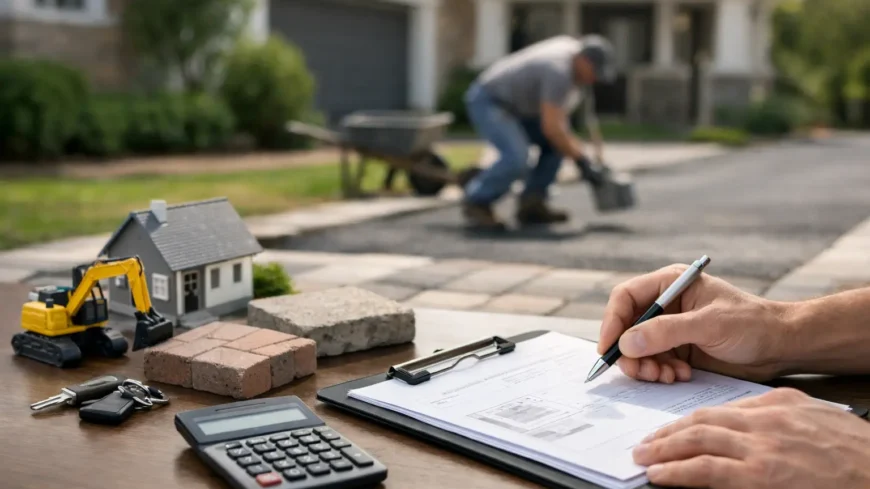
A driveway quote can look competitive on paper yet leave out the work that gives a surface its strength. When you review driveway contractor quotes, the key is not simply finding the lowest total. You need to establish what is included beneath the finished tarmac, how water will be managed, and who is accountable if the work does not perform as promised.
For homeowners, a new driveway is a visible investment in access, appearance and property value. For commercial sites, it also affects customer safety, vehicle movements and day-to-day operations. A clear, properly detailed quotation protects both your budget and the finished result.
Review Driveway Contractor Quotes Like for Like
The first rule is simple: do not compare one bottom-line figure with another unless the scope of work is genuinely the same. Two contractors may both price a 60-square-metre driveway, but one could be allowing for excavation, a new stone base and drainage, while the other is pricing a thin layer of tarmac over an existing, unsuitable surface.
Ask each contractor for a written quotation that describes the work in plain terms. It should identify the area to be surfaced, the proposed finish, the preparation required, and anything that sits outside the price. If a quote only states “supply and lay tarmac driveway”, it is not detailed enough to make a sound decision.
A good quote normally sets out whether the contractor will remove the existing driveway, excavate soft ground, install sub-base material, provide edging, form levels and compact every layer. It should also clarify waste removal. Taking away old concrete, soil and broken tarmac requires labour, plant and disposal costs, so it should never be treated as an assumed extra.
The cheapest quote is sometimes the right one, particularly where the existing base is proven, stable and suitable for resurfacing. More often, however, a large price difference tells you that the contractors are allowing for different standards of preparation. That is worth resolving before work begins, not after the driveway starts moving, cracking or holding water.
Look Below the Finished Surface
Fresh black tarmac can make almost any driveway look impressive on day one. Its long-term performance depends far more on the groundworks underneath it. Vehicles transfer weight through the surfacing into the base, and a weak or poorly compacted foundation will eventually show through as ruts, dips and cracks.
Excavation and sub-base
The quotation should state how the contractor intends to prepare the formation and what sub-base they will use. In many domestic projects, crushed aggregate is laid and compacted in layers to create a stable foundation. The required depth depends on ground conditions, the driveway’s intended use and whether cars, vans, delivery vehicles or heavier traffic will use it.
A driveway serving a family car has different demands from a shared access road or a commercial forecourt. Be cautious of fixed specifications offered without a site inspection. An experienced contractor should assess the existing ground, identify soft areas where necessary, and recommend a build-up suited to the traffic load.
Tarmac thickness and material
Ask what type of asphalt or tarmac is proposed and the compacted thickness of the finished surface. The wording matters. A stated loose depth is not the same as the depth after rolling and compaction.
There is no single correct specification for every driveway. A resurfacing project over a sound base may require less construction work than a full replacement. Equally, a driveway with regular vehicle traffic, turning movements or poor ground may need a stronger build-up. What you want is a contractor who can explain the recommendation clearly, rather than one who offers a one-size-fits-all price.
If you are considering tar and chip, block edging or a decorative finish, ensure the quote identifies the chosen materials and the extent of the work. Small details such as kerb lines, apron edges and transitions to paths or garage thresholds can materially affect both appearance and cost.
Check Drainage and Levels Before You Accept
Water is one of the main causes of premature driveway failure. Standing water can penetrate weak points, soften the base and worsen damage during cold weather. It can also create a slip risk and direct surface water towards a building, garage or neighbouring land.
Your quote should explain where water will go. This may involve setting appropriate falls across the driveway, fitting channel drainage at a garage entrance, retaining existing gullies, or providing a suitable permeable solution where required. The exact approach depends on the site, local drainage arrangements and the amount of impermeable area being created.
Do not accept vague wording such as “drainage if required” without asking what the contractor has observed and whether any allowance is included. Equally, do not assume that a new driveway can be laid to match old levels if doing so would send water towards your property. A modest adjustment to levels during construction may prevent a much more expensive problem later.
Understand What the Price Includes and Excludes
A professional quote should make payment and variation terms easy to understand. You should know the total price, whether VAT applies, the deposit required, when later payments are due, and what event would allow the price to change.
Groundwork projects can uncover hidden issues. Buried concrete, poor ground, unknown services or deeper excavation needs are all possible. This does not mean a contractor can add costs without discussion. The quotation should explain that any unforeseen work will be identified, priced and agreed before it is carried out.
Check for exclusions that could lead to surprises. These often include relocating utility covers, repairing damaged walls, tree-root removal, electrical work for gates, or altering existing drainage. An exclusion is not automatically a concern. It is a concern when it is unclear or when the contractor cannot explain how it might affect your final bill.
It is also sensible to ask whether the price includes site protection and a final clean-up. Access routes, paths and garage doors should be protected where practical, and the site should be left safe at the end of each working day.
Assess the Contractor, Not Just the Quote
A detailed price is valuable, but the people delivering the work matter just as much. Driveway installation involves excavation equipment, lorries, hot materials and careful coordination. Choose a contractor that communicates clearly, visits the site, and is prepared to put its recommendations in writing.
Ask who will carry out the work and whether the company uses its own trained team or relies mainly on subcontractors. For larger or shared-access projects, ask how the contractor will manage pedestrian access, deliveries, vehicle movements and disruption to neighbours or customers.
You should also confirm what guarantee is offered, what it covers and how long it lasts. A guarantee should be meaningful, not simply a line added to a sales conversation. Find out who you contact if an issue arises and whether the business has an established local presence to stand behind its workmanship.
References, recent completed work and customer feedback can give useful context, but they should support rather than replace a proper specification. A contractor with strong reviews should still be able to explain base preparation, drainage and materials without avoiding direct questions.
Know the Warning Signs in a Driveway Quote
Pressure is one of the clearest warning signs. Be wary of anyone who says they have leftover material and can only honour a price if you agree immediately. Surfacing materials and plant must be planned properly, and a driveway decision deserves time for review.
Other concerns include cash-only requests, no written scope, unusually low prices with no explanation, or an unwillingness to inspect the site. A reputable contractor will not object to you comparing quotations or asking questions about their construction method.
Be especially careful with estimates that promise a complete job but omit quantities, depths or drainage details. A vague quote can make it difficult to prove what was agreed if the finished work falls short. Clear paperwork is not bureaucracy – it is part of good workmanship and fair customer service.
Make the Final Decision on Value
Once you have comparable quotations, look at the overall value rather than the headline price. Consider the quality of preparation, drainage solution, materials, programme, guarantee, communication and confidence you have in the contractor’s ability to complete the work safely.
For a busy commercial site, the best value may be a contractor that can phase the work around opening hours and minimise closures. For a homeowner, it may be the team that provides proper edging, correct falls and a durable base instead of offering a quick overlay that looks good for one season.
Roadsafe Surfacing Ltd approaches quotations with the detail needed to make an informed choice, from domestic tarmac driveways to larger access and parking areas. A site visit and a clear written scope give everyone a better starting point.
Before you approve any driveway work, take one final moment to read the quote line by line and ask about anything you cannot picture on site. A contractor worth appointing will welcome that conversation, because a durable driveway starts with an agreement that is clear from the ground up.