
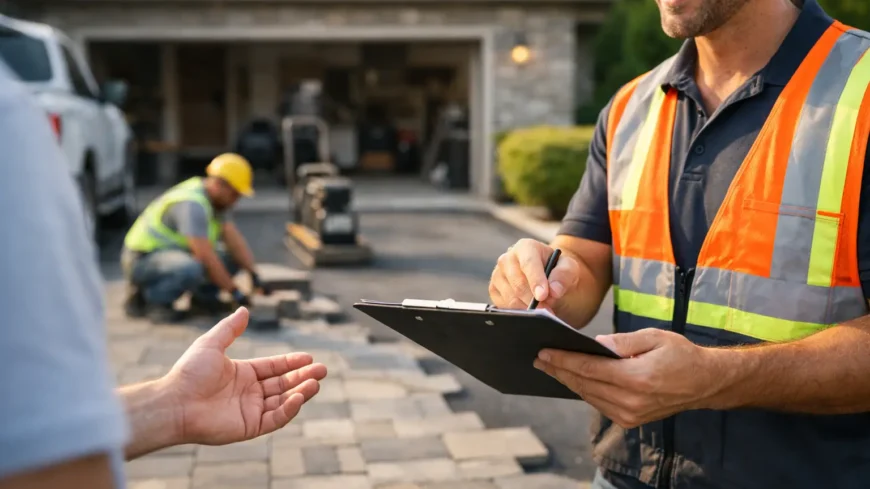
A paving contractor review can tell you far more than whether a customer liked the finished driveway. The useful ones reveal how a contractor handled access, preparation, drainage, communication, site safety and any unexpected issues along the way. Whether you are planning a tarmac driveway, resurfacing a busy car park or arranging pothole repairs, those details are what help you choose with confidence.
A new surface often looks good on the day it is laid. The real test comes through Scottish rain, frost, traffic and regular use. That is why the best reviews focus on the work behind the surface, not just the first impression.
What a paving contractor review can reveal
Look beyond a star rating and read the wording carefully. A short comment such as “great job” is positive, but it does not give much information about how the work was completed. A detailed review that mentions a clear quotation, tidy team, proper edging, drainage improvements or a job completed to the agreed programme is far more useful.
For homeowners, the key question is usually whether the new driveway will remain level, smart and easy to use. For commercial property owners and facilities managers, the stakes can be higher. Poorly planned surfacing can restrict access, create trip hazards, affect deliveries and leave a site exposed to avoidable complaints or liability. Reviews should give you a sense of whether the contractor understands these practical pressures.
Pay attention when customers refer to punctuality and communication. Surfacing work involves plant, aggregates, materials and sometimes changing weather conditions. A dependable contractor will not pretend that every job is free from variables. They will explain the plan, keep you informed if conditions change and make sure you know what is happening before work proceeds.
Look for evidence of proper preparation
The most expensive part of a failed driveway or car park is often not the visible tarmac. It is the cost of lifting it back out because the ground underneath was not prepared correctly.
Strong reviews may mention excavation, removal of unsuitable material, a compacted sub-base, kerbs or edging, and suitable falls for drainage. A customer may not use trade terms, but phrases such as “they dealt with the soft ground”, “the team fixed the drainage problem” or “they rebuilt the base before surfacing” are encouraging signs. They show the contractor did not simply lay a thin finish over an existing problem.
The correct preparation depends on the site. A domestic driveway used by cars needs a different construction from a forecourt carrying delivery vehicles, and a private lane may need a different approach again. A good contractor assesses the ground, expected traffic and water run-off before recommending a surface and specification.
Be cautious of reviews that only praise a low price without mentioning what was included. A cheap quotation can become poor value if it excludes excavation, waste removal, edging, drainage or the depth of materials needed for the job. The clearest reviews often confirm that the final price matched the agreed scope of work.
Details that point to durable work
When several customers independently mention tidy edges, an even finish, water draining correctly or a surface that has held up well over time, that is more meaningful than one vague compliment. Consistent detail is hard to manufacture and gives a clearer picture of standards on site.
It also helps to see reviews across different types of work. A contractor may be well suited to residential driveways, while another has stronger experience in car parks, road surfacing, white lining or emergency repairs. The right choice is not always the contractor with the most reviews. It is the one with relevant experience and a clear method for your particular project.
Check how the contractor treats the site and its users
Surfacing can be disruptive, particularly where people need to keep using a property. For a homeowner, that may mean maintaining safe access to the house. For a business, school, housing development or public-facing site, it can mean protecting pedestrians, managing vehicles and working around opening hours.
A worthwhile paving contractor review often mentions how the team managed these issues. Did they explain when access would be restricted? Were barriers, signs and safe routes put in place? Did the crew keep the area orderly and leave it clean at the end of the job? These are not minor extras. They are signs of a contractor that takes responsibility for the whole project.
For commercial work, look for comments about minimising downtime. A well-organised contractor can phase works, schedule around quieter periods where practical and complete repairs efficiently without compromising the quality of the finished surface. There is sometimes a trade-off: the fastest possible job is not automatically the best one if the base requires more attention or weather prevents a proper finish. What matters is honest planning and sensible decisions on site.
Notice how problems are handled
No construction project is entirely predictable. Buried services, weak ground, hidden damage and poor drainage can become apparent once excavation begins. A reliable contractor does not cover up the issue and hope for the best.
Read reviews for signs that customers were consulted when something changed. Good feedback may describe a contractor explaining the options, setting out any additional cost before proceeding and recommending the solution that protects the life of the surface. That approach is especially valuable when resurfacing older driveways, access roads and car parks, where the visible defects may be only part of the problem.
The response after completion matters too. If a customer needed advice, had a question about curing time or raised a concern, did the contractor answer promptly? Guarantees are reassuring, but they mean more when reviews show that the business stands behind its workmanship in practice.
Reviews should support, not replace, a proper quote
Reviews can narrow your shortlist, but they should not be the only basis for appointing a contractor. Once you have found a company with strong, relevant feedback, ask for a site visit and a written quotation. This should set out the proposed work clearly, including preparation, materials, drainage where required, edging, surface finish, waste removal and any line marking or reinstatement.
Do not be afraid to ask why one recommendation costs more than another. The answer may be that the quotation includes deeper excavation, a stronger base or a more suitable material for the expected use. Equally, a higher price should be justified in plain language. You should understand exactly what you are paying for before work begins.
For example, tar and chip can offer a traditional, grippy finish and work well for certain driveways and rural access routes. Tarmac may be the better option where a clean, smooth surface is required. Pothole repair can be a sensible immediate measure, but widespread failure may indicate that resurfacing is the more economical long-term decision. A knowledgeable contractor will explain the practical pros and cons rather than pushing one solution for every site.
Questions worth asking after reading reviews
When you contact a contractor, use the feedback you have read to guide a better conversation. Ask whether they have completed similar work, how they will manage drainage and access, and what preparation they expect to carry out. For commercial sites, ask how they will protect pedestrians and vehicles, manage deliveries and schedule the work to reduce disruption.
You should also ask who will be responsible on site and whether the team carrying out the work is experienced in that type of surfacing. Clear answers, a sensible inspection and a detailed quotation are usually stronger trust signals than a sales pitch.
Roadsafe Surfacing Ltd approaches residential and commercial work with this same practical focus: assess the site properly, recommend the right surface, carry out the preparation needed and keep customers informed from quotation to completion. That matters for a small driveway just as much as it does for a larger car park or access road.
A review can start the decision, but the contractor’s actions should finish it. Choose the team that can show relevant workmanship, explain the specification without jargon and give you a clear plan for a surface built to last.