
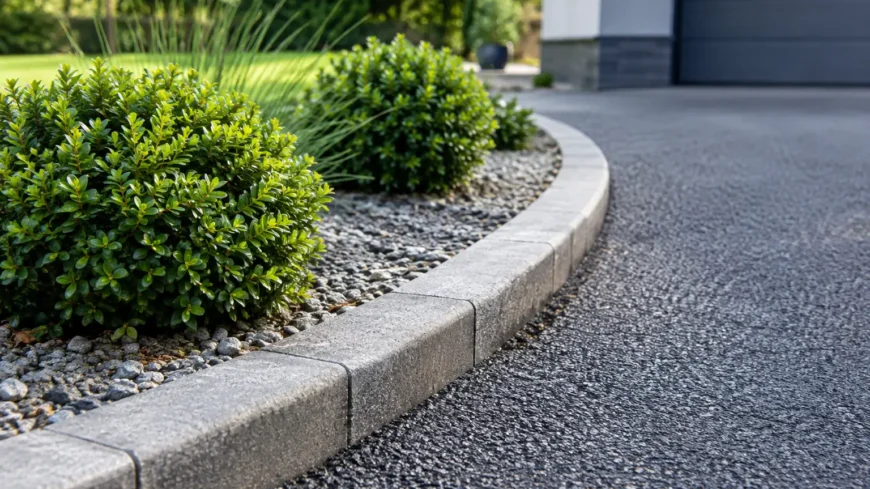
A new driveway can look smart on the day it is laid, but its edges are what decide how well it holds its shape over the years. Without the right restraint, tarmac can spread at the sides, gravel can migrate into flower beds, and block paving can work loose under vehicle weight. Choosing the best driveway edging materials is therefore not just a finishing decision. It is part of building a safe, durable surface that remains tidy and easy to use.
For properties across Scotland, the choice also needs to stand up to wet weather, frost, regular vehicle traffic and the occasional wheel that strays too close to the edge. The best option depends on the driveway surface, ground conditions, drainage requirements and the finish you want to achieve.
What driveway edging needs to do
Driveway edging has a practical job before it has an aesthetic one. It creates a firm boundary between the driveway and surrounding ground, helping the surface resist movement where it is most vulnerable. This matters particularly at entrance points, along curves and beside lawns or planted areas, where tyres can put pressure on the outer edge.
A properly installed edge should support the surface, protect it from crumbling, guide water towards the intended drainage point and give a clean line for mowing or maintenance. On commercial forecourts and car parks, it can also help organise traffic routes and protect landscaped areas from vehicle overrun.
The edging must be installed on a stable base and set at the right level. Good materials cannot compensate for poor excavation, weak sub-base preparation or drainage that leaves water sitting beneath the surface.
Best driveway edging materials compared
Concrete kerbs: the dependable all-round choice
Precast concrete kerbs are one of the most reliable choices for tarmac and asphalt driveways. They offer strong lateral restraint, cope well with repeated loading and provide a crisp, professional edge that suits both homes and commercial sites. Available in straight units, radius kerbs and dropped kerbs, they can be adapted to most driveway layouts.
Concrete is particularly effective where a driveway meets a pavement, road, lawn or gravel border. When bedded and haunched correctly in concrete, it gives tarmac a solid edge to compact against during installation. This reduces the risk of edge breakdown and makes future maintenance more straightforward.
The trade-off is appearance. Standard grey kerbs are practical rather than decorative, though charcoal and coloured options are available. Their weight and the need for proper foundations also make them a contractor-led installation rather than a simple weekend project.
Granite setts: hard-wearing and traditional
Granite setts, sometimes called cobbles, are a strong choice for homeowners looking for a more distinctive finish. They pair especially well with tarmac driveways, creating an attractive border that breaks up a large expanse of black surface. Granite is highly durable, naturally resistant to weathering and well suited to Scottish conditions.
A granite edging course can follow straight lines, sweeping curves and entrance details with more character than large concrete units. It also works well where a property has traditional stonework or where the driveway needs a premium finish without replacing the whole surface with paving.
Setts cost more than standard concrete kerbs and take longer to lay accurately. They still require a firm concrete bed and edge support, especially if they will be driven over. A shallow-set decorative border may look good initially but can move if vehicle tyres regularly clip it.
Block paving edging: flexible in colour and style
Concrete block paving can create a coordinated edge around a block-paved driveway or form a contrasting border beside tarmac. There is a wide choice of sizes, colours and textures, making it easier to match a property’s exterior, existing paths or patio areas. A charcoal border around a lighter block driveway, for example, gives a defined finish without looking overly formal.
For block paving itself, edge restraint is essential. The outer blocks stop the field of paving from spreading and losing jointing sand under traffic. A properly laid soldier course, where blocks are set lengthways, is a common solution, but it should be anchored with concrete haunching rather than simply placed on loose bedding material.
Block edging is not always the strongest answer for tight turning areas or heavy commercial use. In these locations, a concrete kerb may provide better protection. It is also worth avoiding very light-coloured blocks beside tarmac, as tyre marks and bitumen staining can be more noticeable.
Brick edging: neat for lighter-use driveways
Clay bricks provide a warm, classic appearance and can suit period homes, garden-led designs and smaller driveways with light traffic. Quality engineering bricks are denser and more frost-resistant than ordinary facing bricks, making them the sensible choice where the border may encounter damp conditions or occasional vehicle contact.
Brick edging works best as a visual and structural boundary on straight runs or gentle curves. Like paving blocks, it needs proper concrete support to prevent movement. Reclaimed bricks can look attractive, but their condition varies. Soft, damaged or highly porous reclaimed bricks are unlikely to offer the long-term performance required at a driveway edge.
Steel edging: clean lines, limited vehicle restraint
Steel edging is popular in contemporary landscape schemes because it creates a slim, almost invisible boundary between gravel, lawn and planting. Weathering steel develops a rust-coloured patina, while galvanised or powder-coated steel provides a more controlled finish. It is useful for defining curved beds and retaining loose decorative stone.
However, steel edging is rarely the right primary restraint for a vehicle driveway. It can bend or lift if vehicles mount it, and its narrow profile does not provide the same support as kerbs or setts. It is best used away from wheel paths, alongside pedestrian areas, or as a landscape border adjoining a more substantial driveway edge.
Timber edging: natural-looking but shorter lived
Timber can soften the appearance of a rural or informal driveway, particularly beside gravel. Treated sleepers and timber boards are easy to source and can be installed at a relatively modest cost. They are also useful for creating low retaining edges where levels change gradually.
Its weakness is lifespan. Ground contact, standing water and winter conditions eventually take their toll, even on treated timber. It is not ideal beside tarmac where edge restraint needs to be permanent, nor for areas likely to be struck by tyres. Use timber where appearance and light-duty separation matter more than long-term structural support.
Matching edging to your driveway surface
Tarmac and asphalt need firm, fixed edging. Concrete kerbs and granite setts are usually the best driveway edging materials for this job because they allow the surfacing to be compacted tightly against a stable boundary. On a domestic tarmac drive, granite can deliver the more decorative result, while concrete kerbs are often the most cost-effective option for long runs or practical access areas.
Block paving needs edge restraints that are set in concrete, whether these are matching blocks, contrasting blocks, bricks or kerbs. The visual choice is broad, but the construction principle is not negotiable: unsupported blocks will move.
Gravel driveways benefit from an edge that stops stone spreading into lawns, drains and footpaths. Setts, kerbs, blocks and steel can all work, depending on whether vehicles will cross the border. For a gravel drive used daily, setts or kerbs offer the better balance of containment and resistance to tyre pressure.
Drainage and levels matter as much as the material
A raised edge can look tidy, but it must not trap water on the driveway. Falls should direct surface water to suitable drainage, such as a channel drain, permeable area or other approved collection point. Water running towards a house, garage or public pavement is a problem that edging alone cannot solve.
At entrances, consider how tyres will cross the edge. A high kerb can be damaged by repeated contact and may create an awkward bump for vehicles. Dropped kerbs, tapered units or carefully formed transitions can protect both the edging and the vehicle while keeping the entrance accessible.
Where the driveway sits beside a lawn, slightly raised edging can help prevent soil and grass creeping onto the surface. Where drainage is a priority, a flush detail with a channel drain may be more appropriate. The right answer comes from assessing the whole site, not choosing an edging material from appearance alone.
How to choose the right option
Start with traffic. A family car driveway needs less impact resistance than a commercial yard, delivery area or shared access route. Then look at the surface type, the degree of curve, the desired appearance and whether the edge is likely to be driven over. Finally, account for ground levels and water management before any excavation begins.
For most tarmac driveways, concrete kerbs offer dependable performance and value. For a more premium domestic finish, granite setts are difficult to beat. Block or brick edging is ideal when visual coordination is the priority, provided it is installed with proper restraint. Steel and timber have their place in landscaping, but they should not be relied upon where vehicles need a strong edge.
A driveway should be built as one system: foundation, drainage, surfacing and edging all working together. If you are planning a new drive or repairing failing edges, Roadsafe Surfacing Ltd can assess the ground, traffic demands and finish you want, then recommend an edge that will look right and continue doing its job long after the work is complete.